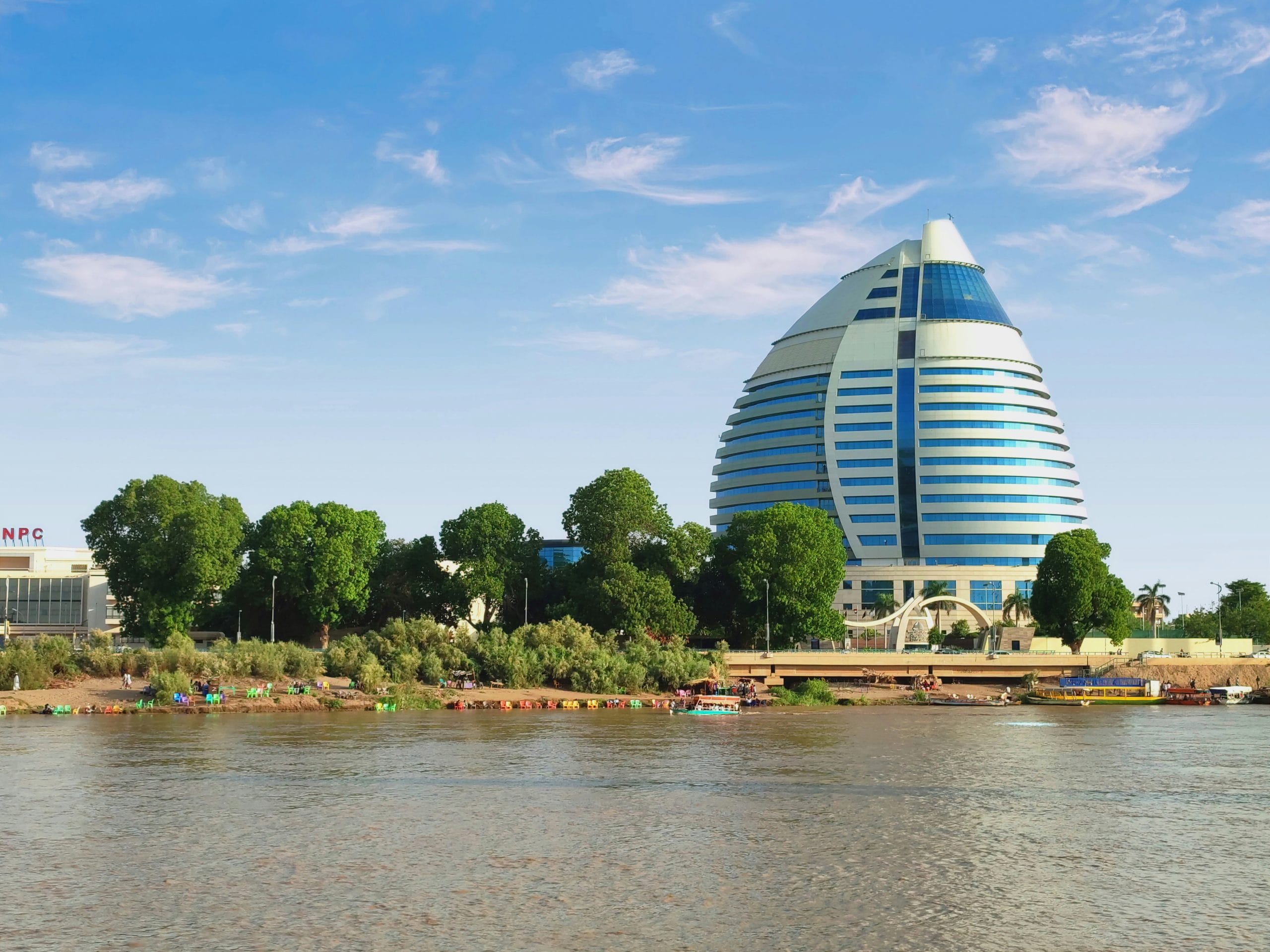
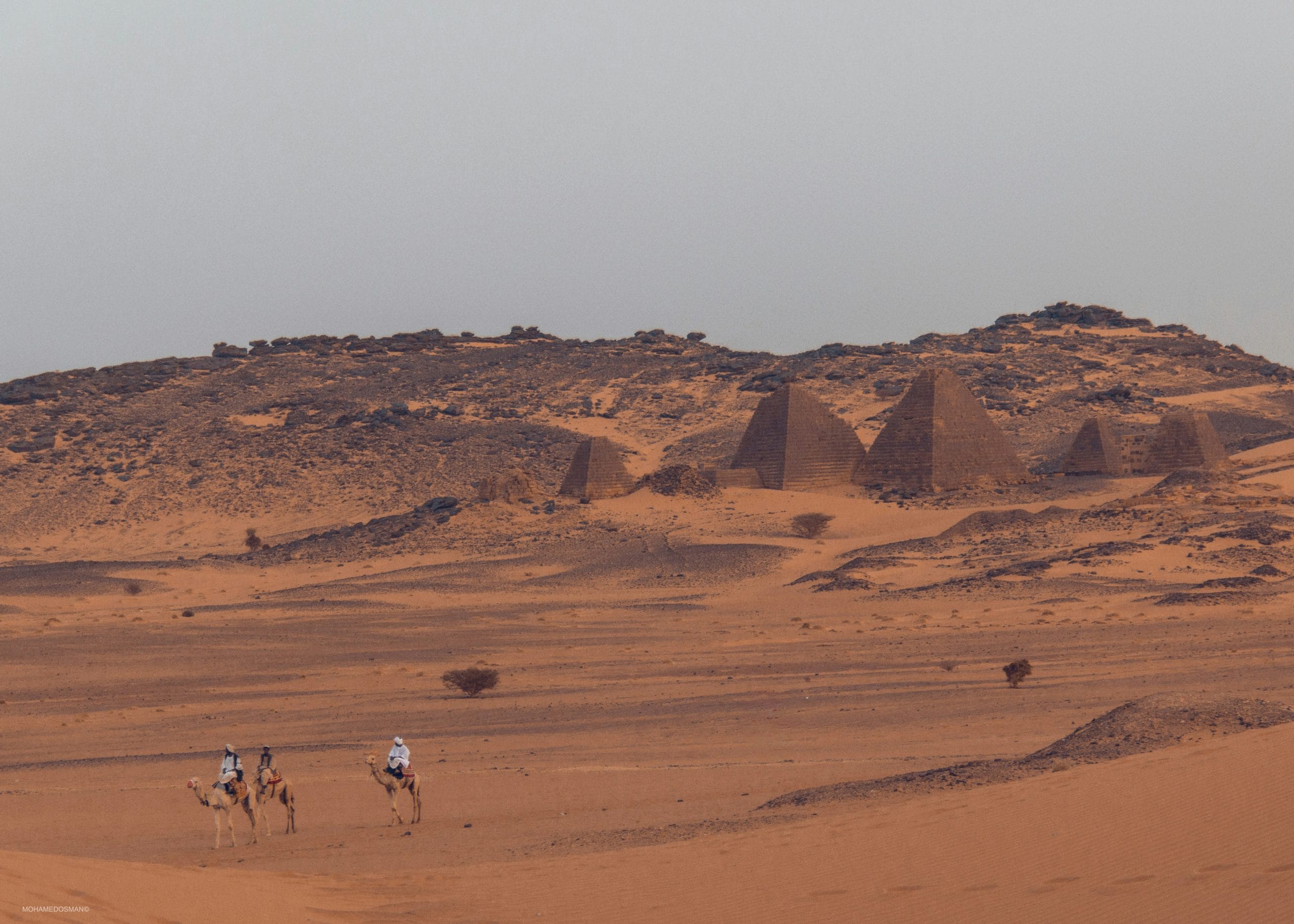
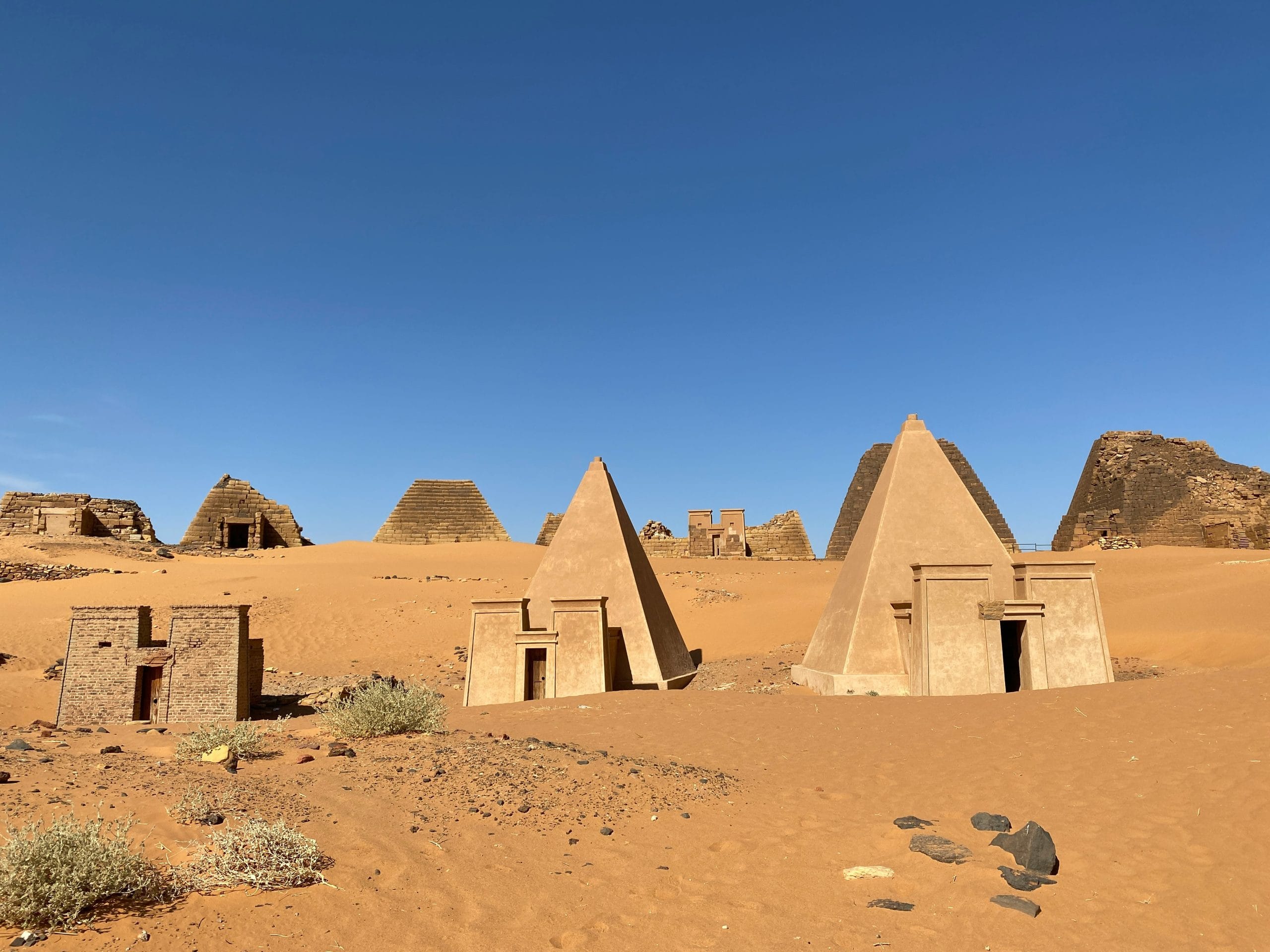
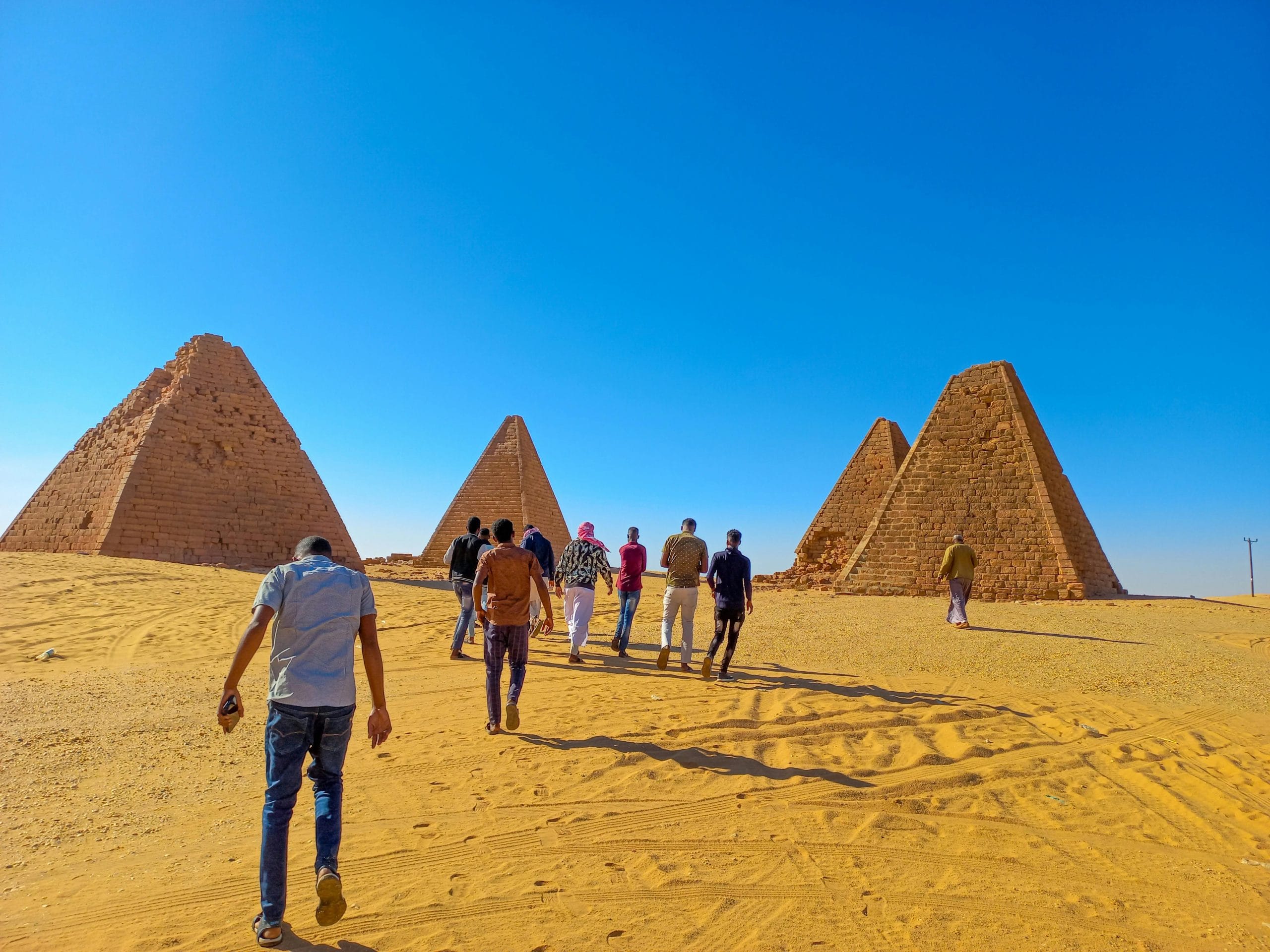
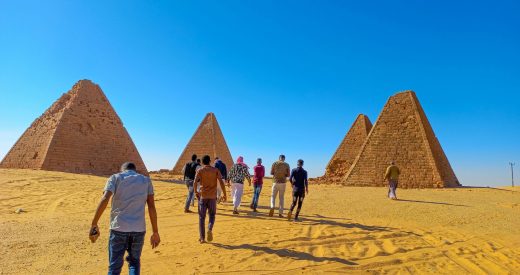
The East African country is a nation where the Sahara meets the Sahel and home to where the Blue and White Nile coverage. The banks of the Nile have brought settlers for tens of thousands of years, with the country formerly home to ancient civilisations – whose mark you can still see in Sudan today.
The country contains an array of remarkable archaeological and historical sites including hundreds of pyramids built by the Kingdom of Kush in Meroë – one of the stand out historic sites in Africa.
The nation is also home to mountains, including the sacred Jebel Barkal, a UNESCO World Heritage site. Sudan reaches the shores of the Red Sea and acts as a gateway to the Middle East – with historic trade and cultural links to the Arabian peninsula.
Sudan also plays host to many different wildlife species and contains national parks, with lions, elephants, cheetah and giraffe among much more, and acts as a migration route for many species of bird.
It’s a country, which has been scarred by conflict in recent history, but during times of stability, tourists can be treated to a fascinating spread of scenery, ancient history and a vibrant cultural mix.
Sudan and South Sudan are two separate countries. Until 2011, they were part of the same state, Sudan, but decades of political, religious and ethnic tensions between the largely Arab and Muslim north and the more ethnically diverse south contributed to two long civil wars.
A peace agreement in 2005 ended the Second Sudanese Civil War and gave southern Sudan the right to vote on independence. In a referendum held in January 2011, almost 99% of voters supported separation. South Sudan formally became independent on 9 July 2011, with Juba as its capital.
Relations have often remained difficult since independence, particularly over oil, borders and the disputed Abyei region. South Sudan inherited most of the former country's oil reserves, but the pipelines carrying that oil to the Red Sea run north through Sudan, leaving the two countries economically interconnected.
South Sudan's independence also did not end conflict. A civil war broke out within the new country in 2013, while Sudan itself has experienced severe instability and, since 2023, a major war between the Sudanese Armed Forces and the Rapid Support Forces.
Most international visitors will need to arrange a visa before travelling to Sudan and the requirements vary according to your nationality.
Since the conflict began in 2023 visas are not being issued at embassies and consulates. However, it is possible to get authorisation inside Sudan and then obtain the visas on arrival.
Untamed Borders can assist guests with the process, where visa permits are obtained via our local team in Sudan, who deal directly with the immigration offices in the country. If successfully issued, you can then obtain a visa on arrival.
While visits and visas to Sudan are possible, it is important to note that they are very unreliable and flexibility will be important when planning a trip.
Turn-around time for processing applications can vary greatly, from anything between 10 days up to 10 weeks, with no clear patterns or reasonings. Applying a long-time before your trip is highly advisable.
Once issued, the visa permit is only valid for 60 days.
At present Sudan should not be treated as a normal independent travel destination and people considering visiting the country should only go with an experienced tour operator. It is not permitted to travel independently in Sudan.
The conflict that began in April 2023 between the Sudanese Armed Forces (SAF) and the Rapid Support Forces (RSF) remains ongoing and, although the conflict has calmed relatively, different parts of the country are controlled by different forces.
Security conditions can change rapidly and checkpoints, road closures and restrictions on movement are common.
Foreign travellers also require permits to travel beyond Red Sea State, which can be sourced using the assistance of a specialist tour operator.
On top of this, road conditions can become unpredictable outside of major cities and telecommunications and internet access can be unreliable or non-existent in rural areas.
Anyone considering travelling to Sudan should therefore use an experienced operator with strong local contacts who can assess the situation on the ground and arrange the necessary permissions.
Climatically, the best time to visit Sudan is generally between November and February, when temperatures across much of the country are cooler and conditions are dry.
Sudan is enormous, however, and there are significant climatic differences between the almost rainless Sahara in the north, the more seasonal central regions and the Red Sea coast. Rainfall generally increases the further south you travel.
November to February – Winter
This is normally the best period for travelling in Sudan.
Days are generally warm and sunny, while nights can be pleasantly cool, particularly in the northern deserts around places such as Karima, Meroë and Wadi Halfa.
Desert nights can become surprisingly cold, so travellers camping in Northern Sudan should bring warm clothing for the evenings.
Conditions along the Red Sea are also generally more comfortable than during the extremely hot and humid summer months.
We time our Sudan group trips to run in this cooler period of the year.
March to May – Spring
Temperatures begin rising significantly from March onwards.
April and May can be extremely hot across much of Sudan, with daytime temperatures frequently exceeding 40°C in the desert and inland areas. In parts of northern Sudan, temperatures can rise above 43°C.
Travel is still physically possible from a climatic perspective, but sightseeing, camping and long road journeys can become extremely uncomfortable.
June to September – Summer
This is the main rainy period across central and southern parts of Sudan, although the far north remains extremely dry.
Rainfall becomes progressively heavier towards the south, while flash flooding can affect roads and normally dry wadis can become torrents. These heavy deluges can cut certain regions off from others and create hazardous conditions for driving - making navigating the country very difficult.
Temperatures also remain very high and the Red Sea coast can become unbearably humid.
October – Autumn
October is a transitional month.
Rainfall generally begins easing across much of the country and temperatures gradually become more comfortable, although flooding and damaged roads may remain an issue following the rainy season.
By November, conditions across northern and central Sudan normally become considerably better for travelling.
Sudan's international transport situation has changed substantially since the outbreak of war in 2023.
As of September 2026, Port Sudan International Airport and Khartoum International Airport are both operating limited international and domestic flights - however, these can face sporadic disruption and suspended services during times of heightened tensions.
Port Sudan has been one of the country's principal international gateways during the conflict. International connections include services to regional and Middle Eastern hubs, and Turkish Airlines offers direct services between Istanbul and Port Sudan.
Anyone flying to Sudan should reconfirm their flight immediately before travel, as schedules and airport operations remain liable to change.
The Untamed
Overland Travel to Sudan
Sudan shares borders with Egypt, Libya, Chad, the Central African Republic, South Sudan, Ethiopia and Eritrea.
Historically, one of the most frequently used overland routes by international travellers was between Egypt and Sudan via Wadi Halfa.
However, in the modern-era and due to the recent conflict, the reality of overlanding into Sudan is not possible.
The route between Egypt and Sudan is now no longer feasible and there has been extensive pressure on these crossings with people escaping conflict, leading to long delays and limited facilities.
The border with South Sudan also faces considerable tensions and it is not realistic for an international traveller to make this journey
The situation on Sudan's other land borders is also very complicated. Sudan's borders with Chad and Eritrea are closed, meanwhile its frontiers with other nations in the region are often remote and at times sketchy security wise.
Crossing Sudan overland should therefore not currently be approached as a conventional trans-African road journey. For further advice about travelling in Sudan, please email our specialist team on - info@untamedborders.com.
Borders team can assist with flight routing advice, ahead of your trip.
Sudan is a challenging destination and it has experienced conflict in recent years. However, the security situation varies substantially between different regions.
Some areas are considerably more affected than others. Over recent years Untamed Borders has been guiding guests around Port Sudan, which was in a much more stable state than large parts of the country.
As of September 2026, we are now expanding our operations to other parts of the country, however, there are still areas we avoid.
Travelling between certain regions can be very difficult and the security situation can be unpredictable.
It is therefore advised that people only travel with an experienced tour operator, who knows the country well and one who has access to extensive information channels, to keep across developing situations.
Road conditions can also become treacherous at certain times of year, due to the country’s season flooding issue. Plus the country is vast, with large expanses of remote countryside, where access to medical support, fuel, food, water and shelter, can be very spread out.
It’s also important that visitors take particular care when it comes to taking photographs. Due to the heightened tensions in the country, there are a lot of sensitive sites (more than many destinations), which you can’t take photos of - these include military and government sites, bridges, airports, petrol stations and other critical infrastructure.
Some professional cameras, communications equipment and recording equipment may require additional permits.
Sudan is a predominantly Muslim and generally conservative country, so visitors should dress modestly.
Women do not legally have to cover their heads simply because they are non-Muslim visitors, but shoulders and knees should generally be covered. Long skirts, loose trousers and lightweight long-sleeved tops are practical choices.
Men should normally wear trousers and shirts, rather than shorts, particularly away from tourist or hotel environments.
Lightweight and loose-fitting clothing is best because temperatures can be extremely high and sun cream is essential.
Travellers heading into the desert should also pack a hat, sunglasses, strong sun protection and something warmer for winter evenings.
Sudan is overwhelmingly a cash based economy.
The official currency is the Sudanese Pound (SDG), but the country's currency and banking system have been badly affected by the conflict. The Sudanese pound has also experienced severe depreciation and different currency arrangements have emerged in different areas of control.
International credit and debit cards should not be relied upon either. Most Sudanese ATMs do not accept foreign bank cards and international banking facilities remain extremely limited.
Travellers are generally advised to take out enough US dollars in cash before entering the country, these can then be exchanged into local currency on arrival in Sudan. The Untamed Borders team can assist with converting money in major towns.
Sudan is linguistically diverse.
Arabic is the main language used across much of the country and Sudanese Arabic is the most widely spoken lingua franca.
English is also used, particularly within education, business and some government and professional environments, although levels vary considerably.
Numerous indigenous languages are also spoken by communities across Sudan, including Nubian languages, Beja languages, Fur and many others. Sudan contains hundreds of ethnic and linguistic communities.
Travellers moving outside major towns will benefit enormously from travelling with local guides who speak the languages of the communities being visited.
Internet access in Sudan is unreliable.
Mobile data and internet services exist in major towns and cities, but the conflict has caused widespread damage and disruption to telecommunications infrastructure.
There are regular communications blackouts, and mobile phone and internet networks can stop operating without warning.
Connectivity can also vary dramatically between different regions and areas controlled by different forces.
Anyone travelling in Sudan should download maps, travel documents, contact details and other essential information in advance and should not assume they will have continuous internet access.
Sudanese food combines influences from the Nile Valley, North Africa, the Sahel, the Red Sea and the country's many different ethnic communities.
Sorghum, wheat, beans, meat, vegetables, peanuts and sesame are widely used.
Some common Sudanese foods include:
Tea and coffee are important parts of Sudanese social life. Sweet black tea is extremely common and coffee traditions are particularly strong in eastern Sudan.
Sudan is overwhelmingly Muslim, with Sunni Islam practised by the majority of the population.
Islam plays an important part in daily life, social customs and festivals, and visitors should be particularly respectful during Ramadan and when visiting mosques or religious communities.
Sudan has one of the world’s largest and vibrant Sufi communities. For visitors interested in these Islamic mystical communities, the most common way to explore it is to visit the tomb of Sheikh Hamed al-Nil in Omdurman on Fridays to see drumming, spinning and Sufis in states of religious ecstasy.
There is also a small Christian population, as well as communities where older traditional beliefs and practices remain culturally significant.
Sudan is culturally extremely diverse, so religious and social traditions can vary between Nubian communities in the north, Beja communities in the east, people in Darfur, the Nuba Mountains and other regions.
Season of Migration to the North — Tayeb Salih
Probably Sudan's best-known novel and one of the classics of modern Arabic literature. The story follows a Sudanese man returning home after studying in Europe and explores colonialism, identity, cultural encounters and the relationship between Sudan and the West.
The Sudan Handbook — Edited by John Ryle and others
An excellent introduction for anyone wanting to understand the country beyond individual conflicts. It covers Sudan's history, peoples, politics, religion, economy and different regions, providing useful context to an exceptionally complex country.
A Line in the River: Khartoum, City of Memory — Jamal Mahjoub
Part memoir, part history and part portrait of Khartoum. Mahjoub combines his own memories of the city with Sudan's wider history to provide a particularly atmospheric introduction to the capital and its people.
Darfur: A New History of a Long War — Julie Flint and Alex de Waal
A useful introduction to Darfur and the origins of the conflict that emerged there in the early 2000s. It examines the region's history, communities, politics and relationship with the Sudanese state.
Talking About Trees
A fascinating 2019 documentary following four veteran Sudanese filmmakers attempting to revive cinema in Sudan after decades of censorship and repression. It is as much a portrait of friendship and cultural life as it is a film about filmmaking.
Goodbye Julia
Mohamed Kordofani's acclaimed 2023 drama is set in Khartoum in the years immediately before South Sudan's independence. Through the relationship between two women, one northern Sudanese and one southern Sudanese, it explores race, class, guilt and the divisions that eventually contributed to the partition of the country.
Khartoum
A 2025 documentary created by Sudanese filmmakers and centred on five ordinary residents of the capital. Production began before the 2023 war, but the filmmakers and subjects were subsequently forced to flee, turning the project into a powerful account of revolution, displacement and conflict.
Darfur Now
A 2007 documentary examining the conflict in Darfur through the experiences of Sudanese civilians, humanitarian workers, activists and international figures. Although focused on an earlier period of the Darfur conflict, it provides useful historical context for understanding the region.