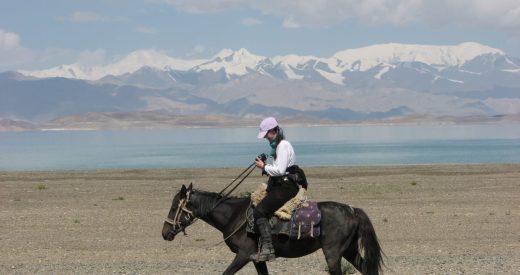
Kyrgyzstan, an offbeat destination renowned for its trekking and horse riding, is an ideal place to discover nomadic culture at a grassroots level. There are many rarely-visited locales to explore throughout this centuries-old Central Asian nation. Many people are drawn to the country with romantic notions of seeing magnificent eagles swooping on to the outspread arms of kalpak-wearing Kyrgyz, or galloping at speed on horseback through verdant fields of swaying grass, finishing off the day sharing beshbarmak and kymyz with herdsmen inside of their yurts. All these are possible here, and much more. If you’re heading out this way, be sure to stop by and visit Kyrgyzstan, the adventure epicentre of Central Asia.
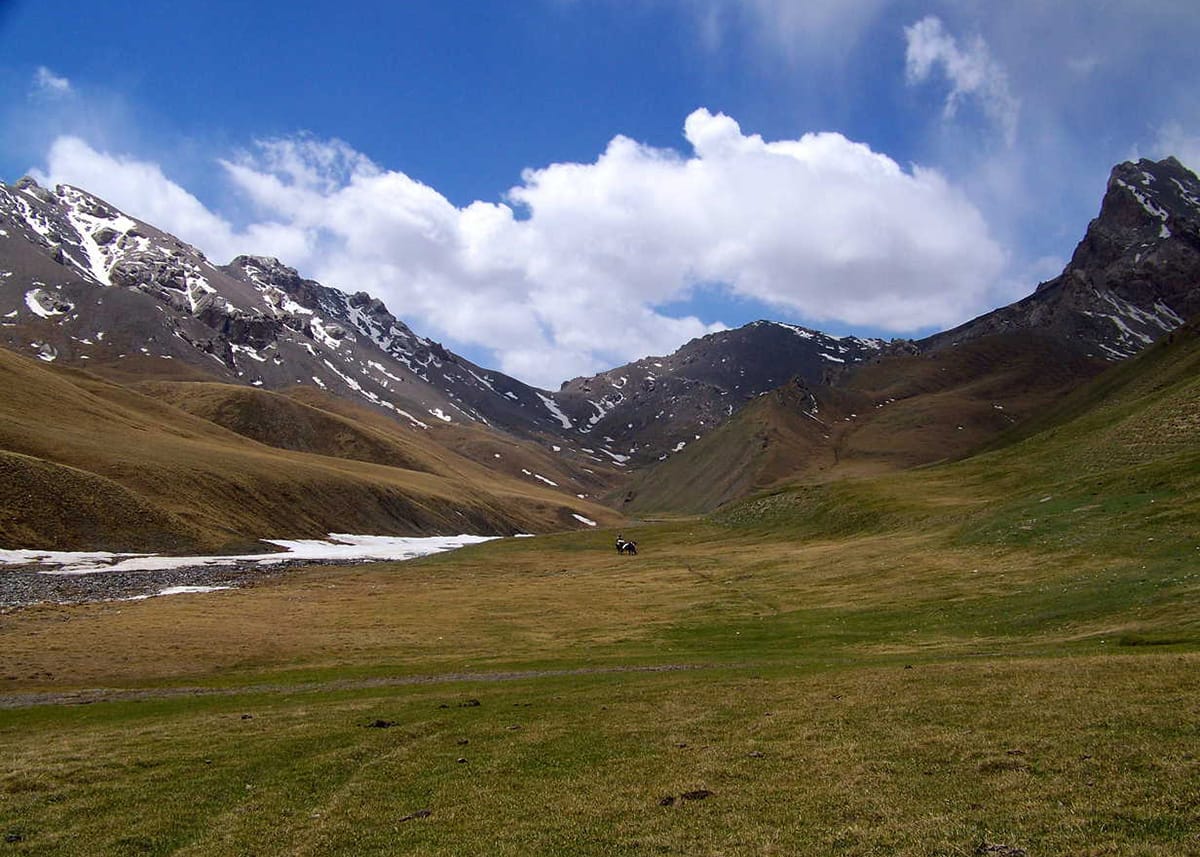
Known as the Mountains of Heaven, the Tien Shan range has drawn countless explorers and travellers over the centuries. Extending for 2800km through Central Asia, over half the range passes along the Kyrgyz border with China. The Tien Shan is a superb location for trekking or mountaineering and has countless unclimbed peaks to be attempted.

One of the most beautiful lakes in Central Asia, it is the tenth largest in the world by volume and the second largest saline lake in the world after the Caspian Sea. Located at an altitude of 1600m, its surrounded by giant alpine peaks and its clear blue waters make it a great stopping off point for any journeys to or from the steppes/mountains. Around the lake are several traditional villages where eagle hunters can be found. The magnificent Berkut (golden eagles) are trained in the millennial Central Asian method of seeking out small game.
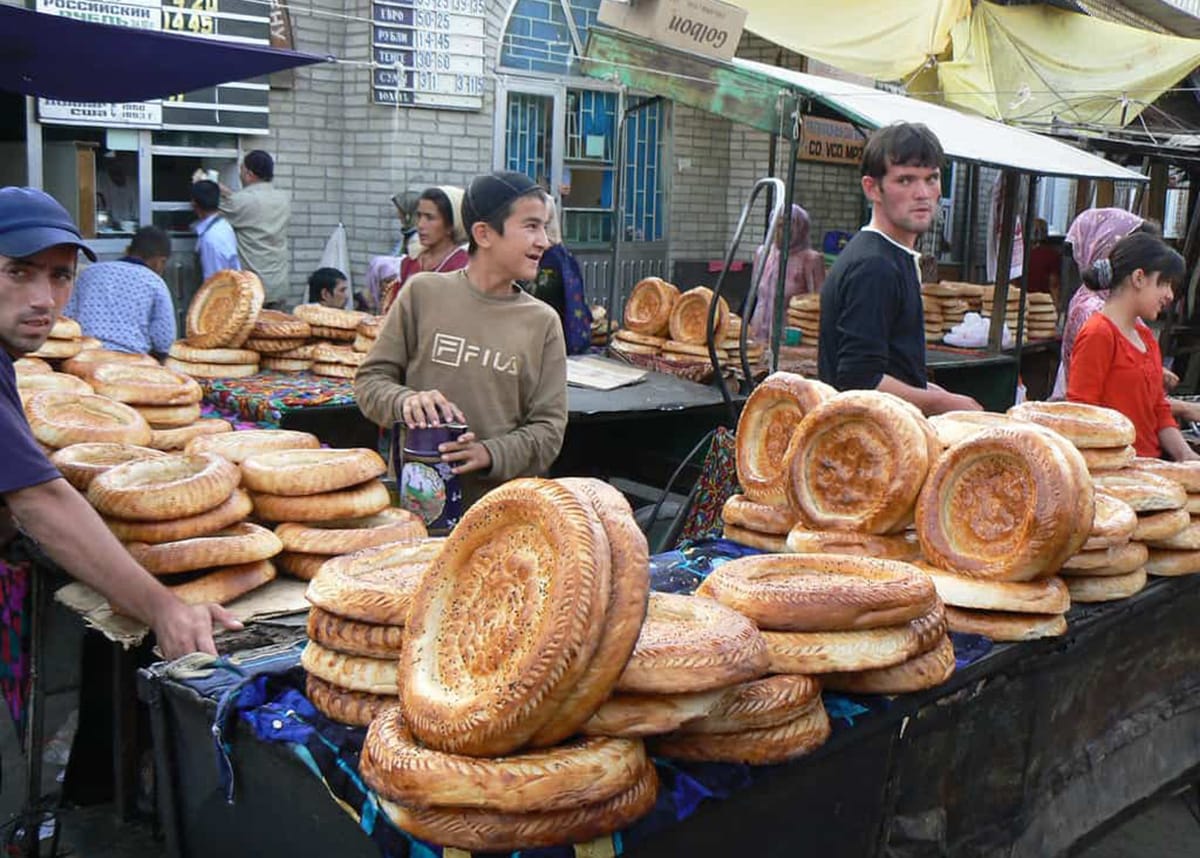
The second largest city in Kyrgyzstan, Osh is a crossroads with a mixed population of Kyrgyz, Uzbek, Russian, Tajiks and other ethnic groups. The Great Silk Road Bazaar is a central feature in the city and the largest in all of Central Asia. A major attraction in Sulayman Mountain, which overlooks the city and was once a site for Muslim pilgrimage. Nowadays Osh is a popular stopping off point with foreigners as the starting point of the Pamir Highway which extends all the way in to Tajikistan.
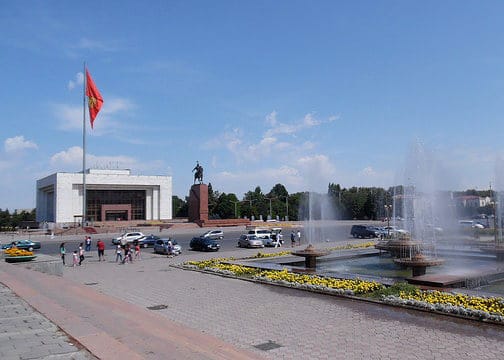
The capital of Kyrgyzstan. The city is a tapestry of Soviet era monuments, historic bazaars (such as Dordoy & Osh), interesting museums and parks. It's also convenient to take day trips to the Ala-Too Mountain Range, as well as Ala-Archa National Park which is only a 30 minute drive away.

The second largest lake in the country - the summer pastures or jailoo surrounding it are seasonally inhabited by semi-nomadic shepherds and horse herders. Traditional and tourist yurts make up villages, and there is plenty to see and do while hiking, horse trekking or even biking in parts. Between the snow-covered mountains and the water can be found an extraordinary stillness, the lake mirroring the ever-changing cloud formations.
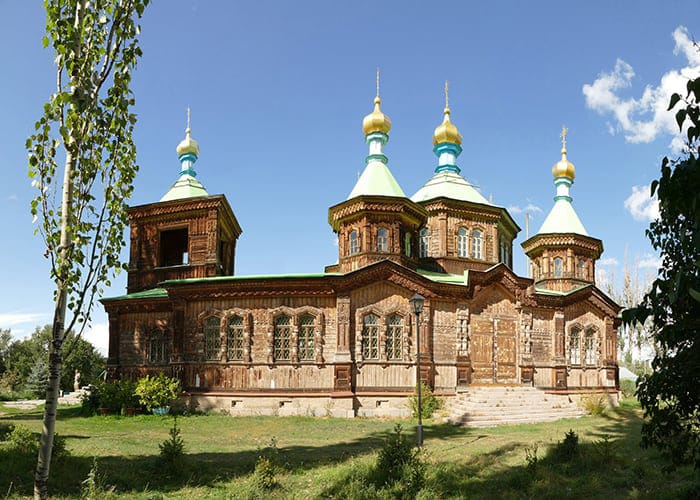
Between the Issyk Kol and Ala Kol lakes, and on the doorstep of the Tien Shen mountains, Karakol is the prefect base for exploring these regions. In winter it is a major ski resort with ski lifts serving over 20km of runs. Nearby, in the Arashun State National Park, is Altyn Arashan, the golden spa, with sulphurous hot springs. In summer, treks around the lake or into the mountains offer the most intimate way to discover the area. The Sunday Market to the north of the town has live animal sales, with sheep and goats often arriving packed into cars.
Kyrgyzstan has traditionally had one of the more straightforward visa systems in Central Asia, although entry rules vary according to nationality and have changed for some passport holders in recent years.
Quite a few nationalities can enter visa-free, although the permitted length of stay differs depending on the country in question, up to 60 days.
For example, British citizens can currently visit Kyrgyzstan without a visa for up to 30 calendar days during each 60-day period. To find out the requirements for your nationality, please email the Untamed Borders team on - info@untamedborders.com
For travellers who do require a visa, Kyrgyzstan operates an e-visa system, allowing eligible visitors to apply online without visiting an embassy or consulate.
Longer stays can involve additional visa and registration requirements, so visitors planning to remain in the country for longer periods should check the rules applying to their nationality carefully.
Certain remote areas close to Kyrgyzstan's international borders also require a separate Border Zone Permit. These permits normally need to be arranged in advance.
Yes. Kyrgyzstan can be visited independently, particularly if you’re visiting Bishkek or other major sites on the tourist trail. This certainly is the case during the warmer months.
Public transport between towns is inexpensive, with marshrutkas – minibuses operating fixed and semi-fixed routes – and shared taxis forming the backbone of the country's transport network.There are also domestic flights, particularly between Bishkek and Osh, while car hire is available in the larger cities.
However, Kyrgyzstan is overwhelmingly mountainous and many of its most spectacular locations are considerably more difficult to reach, in remote settings.
Places such as Song-Kul, Kel-Suu, the Alay Mountains, the Sary-Jaz Valley and high trekking routes around Karakol can involve rough roads, river crossings, high mountain passes and long distances without fuel stations or other facilities.
Mobile phone coverage can disappear completely in remote valleys and mountain areas, while bad weather can rapidly make roads and hiking routes impassable. Some locations also require border permits.
The country also suffers from harsh winters, with much of the country at high altitude, leading to heavy snowfall and difficult conditions during the winter months.
For more ambitious mountain and winter journeys, horse treks, off-road routes and expeditions into remote border regions, using an experienced tour operator, such as Untamed Borders, can make travel considerably easier and safer.
The best time to visit Kyrgyzstan depends heavily on what you want to do.
Kyrgyzstan is one of the most mountainous countries in the world and altitude has a huge influence on its climate. Bishkek and the lower valleys can be extremely hot during summer while, at exactly the same time, nights at high-altitude locations such as Song-Kul can be close to freezing.
November to February – Winter
Winter in Kyrgyzstan is cold, particularly in the mountains and high inland valleys.
Bishkek regularly experiences temperatures below freezing, while mountainous areas can fall to -20°C or considerably lower. Snow closes many high mountain roads and passes, making places such as Song-Kul and Kel-Suu difficult or impossible to access by conventional road.
However, winter is becoming an increasingly popular time to visit Kyrgyzstan.The mountains around Karakol are one of Central Asia's main skiing destinations, with the ski season generally running from December until March. Jyrgalan and other areas of the Tian Shan also attract skiers, snowboarders and backcountry ski-tourers.
Snow-covered landscapes around Issyk-Kul and the Tian Shan can be spectacular and accommodation prices are generally lower than during summer.
For travellers wanting to trek across high passes, stay in seasonal yurt camps or make long overland journeys through the mountains, though, winter is generally not the best time to visit.
March to May – Spring
Spring is a transitional period and conditions vary dramatically according to altitude.
March can still feel like winter, particularly in the mountains, but the lower Chuy and Fergana valleys begin warming relatively quickly.
By April, Bishkek, Osh and the lower valleys are becoming much greener and warmer. Spring flowers begin appearing and the foothills can be particularly attractive.
However, many of Kyrgyzstan's famous high-altitude destinations remain inaccessible. Snow can remain on mountain passes well into May or even June, and seasonal yurt camps around places such as Song-Kul are generally not fully operational yet.
May can be an excellent month for lower-altitude travel, with pleasant temperatures around Bishkek, Osh and Issyk-Kul and fewer visitors than during the main summer season.
It is also a good time for lower-level hiking in areas such as Ala-Archa National Park and the foothills around Karakol.
Anyone planning serious high-altitude trekking should generally wait until later in the year.
June to September – Summer
Summer is the main adventure travel season in Kyrgyzstan.
From June onwards, snow begins clearing from the higher passes, shepherding families move livestock onto their summer pastures – known as jailoo – and seasonal yurt camps reopen throughout the mountains.
July and August are then the peak months. This is generally the best period for trekking around Ala-Kul, Altyn Arashan, the Alay Mountains, Song-Kul, Kel-Suu and the central Tian Shan. It is also the main season for horse trekking and camping.
Lowland temperatures can be very hot. Bishkek and the Chuy Valley can experience temperatures approaching 40°C during hot spells, while mountain temperatures remain considerably cooler.
The contrast can be dramatic. You might be wearing shorts in Bishkek before needing several warm layers around a high-altitude yurt camp later the same day. Even during July and August, snow is possible on high passes and temperatures can fall sharply after sunset.
Untamed Borders has organised a number of group trips to Kyrgyzstan in August/September, including tours to the World Nomad Games, road trips along the Pamir Highway which finish in Osh and Unseen Kyrgyzstan trekking tours.
September is another good month to visit Kyrgyzstan. Temperatures begin becoming more comfortable, there are fewer visitors and trekking remains possible across much of the country. Autumn colours also begin appearing in the mountain valleys.
However, by the second half of September, some high-altitude yurt camps begin closing and early snow can affect the highest trekking routes.
October – Autumn Transitional Month
October can be an excellent time for travelling through Kyrgyzstan's lower valleys, cities and around Issyk-Kul.
The summer crowds have largely disappeared, daytime temperatures can still be comfortable and the forests around Karakol and other parts of the Tian Shan can produce impressive autumn colours.
However, winter arrives quickly at altitude. Snow increasingly affects high passes during October and most seasonal yurt camps at Song-Kul and other high mountain locations have already closed.
Lower-altitude hiking can still be possible, but anyone planning substantial mountain journeys should prepare for rapidly changing weather and increasingly wintry conditions.
Kyrgyzstan's principal international gateway is Manas International Airport, outside Bishkek.
Bishkek has good connections with destinations across Central Asia, Turkey, the Gulf and other parts of Asia.
Travellers arriving from the UK and western Europe will usually connect through a major regional hub, with Istanbul being one of the most convenient options.
The country's second major airport is Osh International Airport, which is particularly useful for travellers heading directly into southern Kyrgyzstan, the Fergana Valley or the Alay Mountains.Domestic flights can also be extremely useful.
Although Kyrgyzstan is much smaller than neighbouring Kazakhstan, the mountain ranges running across the country make journeys by road surprisingly long. The road journey between Bishkek and Osh, for example, crosses several major mountain passes, while a domestic flight takes only a fraction of the time.
Overland Travel to Kyrgyzstan
Kyrgyzstan shares land borders with Kazakhstan, Uzbekistan, Tajikistan and China, making it an excellent country to include in a longer Central Asian overland journey.
The situation at individual crossings can change, however, and travellers should check that their intended border post is open to foreign nationals before travelling. Border posts can also close temporarily because of weather, public holidays or security issues.
Kazakhstan
The easiest and most frequently used overland route is between Bishkek and Almaty.
The Ak-Zhol/Korday crossing north of Bishkek is the main border post on this route and is one of Kyrgyzstan's busiest international crossings. Buses, minibuses, taxis and private vehicles regularly travel between the two cities.
Another particularly useful crossing is Karkyra/Kegen, which provides a much more direct route between the eastern Issyk-Kul region and Almaty.
It avoids travelling all the way back through Bishkek, making it useful for travellers travelling between Karakol and Almaty, although the crossing has traditionally operated seasonally and travellers should confirm that it is open before setting out.
Other road crossings connect the countries around the Chuy and Talas regions.
Uzbekistan
Crossing between Kyrgyzstan and Uzbekistan is normally straightforward.
The most important crossing for tourists is Dostuk/Dostlik, immediately outside Osh. It connects southern Kyrgyzstan with the Uzbek Fergana Valley and is commonly used by travellers heading between Osh and Andijan.
From there, travellers can continue towards Tashkent, Samarkand and the rest of Uzbekistan.
Other border crossings exist further north, including routes connecting the Jalal-Abad region with Uzbekistan's Namangan region.
Tajikistan
Travel between Kyrgyzstan and Tajikistan has become possible again following several years of border closures.
The border was closed after armed clashes between the two countries in 2021 and 2022. However, Kyrgyzstan and Tajikistan signed an agreement resolving their long-running border dispute in March 2025, and border and transport links began reopening.
The most famous crossing used is the high-altitude route connecting the eastern Pamirs with southern Kyrgyzstan, near Osh, which forms part of the Pamir Highway.
Untamed Borders’ guests cross this border when travelling on the Pamir Highway group trip from Dushanbe, through the Pamir Mountains, to Osh in Kyrgyzstan.
China
Kyrgyzstan also shares a spectacular high-altitude frontier with China's Xinjiang region, with the two traditional international road crossings at the Torugart Pass and Irkeshtam Pass.
Torugart lies southeast of Naryn and has historically been one of the great overland routes between the Tian Shan and Kashgar.
Irkeshtam lies further south, beyond Sary-Tash, and is generally the more straightforward route for travellers heading between Osh and Kashgar.
Crossing into China is considerably more complicated than travelling between the Central Asian republics. Opening hours can be restricted, the border closes for Chinese public holidays and transport arrangements on either side of the frontier need to be organised carefully.
Travellers should check the latest Chinese visa requirements and border procedures well in advance.
If you’re planning an overland trip through Kyrgyzstan, contact the Untamed Borders team on - info@untamedborders.com - and we will be able to advise you the best options for your route.
Kyrgyzstan is generally a relatively straightforward country for experienced travellers to visit.
Bishkek, Osh and other popular tourist areas can be enjoyed with very little issue. However, the natural environment is often a greater concern than crime or insecurity.
Around 90% of Kyrgyzstan is mountainous and trekking regularly takes travellers into extremely remote terrain.
Avalanches, landslides, rockfalls, sudden snowfall, flash flooding, altitude sickness and rapidly changing weather are all potential hazards. At higher elevations, snow can fall even during summer.
Mobile coverage can disappear completely in remote valleys, while rescue services and medical facilities are considerably more limited than in many European mountain destinations. Resupply locations, for food, basic medical provisions and fuel, can also be far apart in remote mountain areas.
Anyone undertaking serious trekking should be well experienced, have the appropriate equipment, knowledge of the conditions and consider travelling with a tour operator.
Road conditions can also be challenging in the nation, particularly during winter, and safety on the roads is one concern. The terrain can be rough, with big drops off roads in mountain areas and rapidly changing weather conditions can make routes impassable.
Extra caution should also be taken in border areas and travellers should avoid wandering into restricted areas.
Kyrgyzstan is officially a secular country and there is no strict national dress code for visitors.
In Bishkek, Karakol and other larger towns, clothing is generally relaxed and visitors will see jeans, T-shirts, shorts and other conventional European-style clothing.
Kyrgyzstan is, however, a predominantly Muslim country and attitudes can be more conservative in some rural areas, particularly in southern Kyrgyzstan.
When visiting mosques or religious sites, both men and women should dress respectfully, with shoulders and knees covered. Women are also expected to cover their hair inside mosques.
For most travellers, climate and altitude are much more important considerations than religious restrictions.
During summer, lightweight clothing, a sun hat and strong sun protection are useful in Bishkek and the lower valleys.
Anyone travelling into the mountains should bring layers, waterproof clothing and warm clothing even in July and August. Temperatures around places such as Song-Kul can fall dramatically once the sun disappears.
In winter, these temperatures can plummet to minus 20 degrees celsius or more, so having thermals, proper jackets, hats, gloves, scarves and other cosy clothing, is vital.
Kyrgyzstan's currency is the Kyrgyz som (KGS). Cash remains important, particularly outside Bishkek and the larger towns, although card payments have become increasingly common.
ATMs are widely available in Bishkek, Osh, Karakol and other major towns. Visa cards are accepted in many hotels, restaurants and larger shops, while Mastercard acceptance can be slightly less consistent.
However, for purchases in rural areas or in markets, cash is still very much king and the availability of ATMs in the countryside can be far apart or non-existent in certain areas. Yurt camps, homestays, small restaurants and shops in rural villages are likely to only accept cash.
Withdrawing enough money for your trip or bringing a stash of US dollars to exchange in a major town is advised, so you aren’t caught short. The Untamed Borders team can assist with exchanging money when in a larger urban area.
QR-code payment systems are also extremely common among local residents. However, many QR systems are linked to local Kyrgyz bank accounts and therefore aren't always practical for short-term foreign visitors.
Kyrgyz is the state language of Kyrgyzstan, while Russian has official-language status.
Kyrgyz is a Turkic language closely related to Kazakh and other Central Asian Turkic languages.
Russian remains widely used in Bishkek and continues to function as an important language of business, education and communication between different ethnic groups.
In southern Kyrgyzstan, particularly around Osh and the Fergana Valley, Uzbek is also widely spoken because of the country's substantial ethnic Uzbek population.
English is increasingly spoken by younger people and those working in tourism, particularly in Bishkek, Karakol and established trekking destinations. However, outside tourist areas it should not be assumed that English will be understood.
Internet access is generally good and inexpensive in Kyrgyzstan's main population centres.
Bishkek, Osh, Karakol and the larger towns have widespread mobile data coverage, cafés and hotels usually provide Wi-Fi and buying a local SIM card is relatively straightforward.
Coverage is also available along many of the country's principal roads and around much of Issyk-Kul. However, Kyrgyzstan's geography makes universal coverage impossible.
Once you travel deep into the Tian Shan, Alay Mountains or remote valleys, the signal can rapidly disappear.
Places such as Song-Kul, Kel-Suu and remote trekking routes can have very limited or nonexistent mobile reception.
Anyone heading into the mountains should therefore download maps, booking information, permits and other essential documents before leaving town and should not rely on being able to access the internet in an emergency.
Traditional Kyrgyz cuisine reflects the country's nomadic pastoral heritage, so meat, dairy products, noodles and bread feature heavily. Lamb, beef and horse meat are all commonly eaten.
Kyrgyz cuisine has also been heavily influenced by neighbouring Uzbek, Uyghur, Dungan and Russian food traditions, meaning travellers will encounter excellent noodles, dumplings, soups, breads and rice dishes throughout the country.
One of the best-known dishes is beshbarmak, made from boiled meat served with noodles and onion broth. Versions of the dish are eaten throughout nomadic Central Asia.
Other foods to look out for include:
One particularly interesting regional speciality is ashlyan-fu, a cold, spicy noodle dish strongly associated with the Dungan community in Karakol.
Traditional rural cuisine is heavily meat-based, so vegetarians may have fewer choices in small villages and yurt camps. Bishkek and Karakol, though, have an increasingly varied restaurant scene.
Tea is enormously important socially and is offered almost everywhere. Alcohol is also widely available, particularly beer and vodka, despite the country's Muslim majority.
Kyrgyzstan is constitutionally a secular state.
The large majority of the population is Muslim, predominantly Sunni Muslim, although the way Islam is practised varies considerably between families and regions.
Islam among the traditionally nomadic Kyrgyz population has historically existed alongside older cultural customs and traditions, and Kyrgyzstan is considerably less socially conservative than many Muslim-majority countries.
Religious observance has increased since the collapse of the Soviet Union, and mosques are now common throughout the country.
The main religious minority is Russian Orthodox Christian, particularly among the country's Russian and other Slavic communities.
Jamilia — Chingiz Aitmatov
Probably the most accessible introduction to Kyrgyzstan's greatest writer. Set in a rural Kyrgyz community during the Second World War, the novella tells a deceptively simple love story while exploring village life, tradition, family expectations and individual freedom. Aitmatov's descriptions of the Kyrgyz landscape are central to the book.
Have the Mountains Fallen? — Jeffrey B. Lilley
A fascinating combination of biography and modern Kyrgyz history. The book follows the lives of writer Chingiz Aitmatov and broadcaster Azamat Altay, using their experiences to examine Soviet rule, exile, the Cold War and Kyrgyzstan's eventual independence. The author spent several years living and working in Kyrgyzstan.
Sovietistan — Erika Fatland
Not exclusively about Kyrgyzstan, but one of the most readable introductions to post-Soviet Central Asia. Fatland travels through all five former Soviet Central Asian republics, examining their history, politics, traditions and the strange legacies left by the USSR. The Kyrgyzstan sections provide useful context for a wider journey through the region.
Land of Forty Tribes — Farideh Heyat
Part travel account and part anthropological study, following a British-Iranian anthropologist living and travelling in Kyrgyzstan and Uzbekistan. It explores Kyrgyz traditions, gender relations, family life and the changes experienced by the country after the Soviet collapse.
Kurmanjan Datka: Queen of the Mountains
A large-scale historical epic about Kurmanjan Datka, the extraordinarily influential 19th-century leader known as the Queen of the Alay. The film covers the struggle between Kyrgyz groups, the Kokand Khanate and the expanding Russian Empire and is one of the easiest ways to gain some background to southern Kyrgyzstan before travelling there.
Heavenly Nomadic — Mirlan Abdykalykov
One of the best films for travellers interested in Kyrgyzstan's high mountain pastoral culture. It follows several generations of a family living with their horses in the mountains and explores the gradual disappearance of traditional nomadic lifestyles. The Kyrgyz landscape is almost as important to the film as its characters.
Centaur — Aktan Arym Kubat
A modern drama built around Kyrgyzstan's deep cultural relationship with horses. Its central character believes the Kyrgyz people lost part of their spiritual identity when they abandoned their traditional relationship with the horse. The film mixes contemporary village life with mythology, social change and questions about national identity.
Beshkempir: The Adopted Son — Aktan Abdykalykov
A coming-of-age film set in a Kyrgyz village and one of the most internationally recognised films to emerge from the country's post-Soviet cinema. It focuses on childhood, family relationships and rural traditions and offers a beautifully understated portrait of everyday Kyrgyz life.