
Overlooking the Gulf of Aden, Djibouti’s landscape is divided by mountain ranges to the north, volcanic plateaus and coastal plains of the central and southern regions blending around vast regions of uninhabited non-arable land. Uniquely the country also is home to Lake Assal, Africa’s lowest point at 157m below sea level, and also the second most saline lake in the world – the first one being in Antarctica.
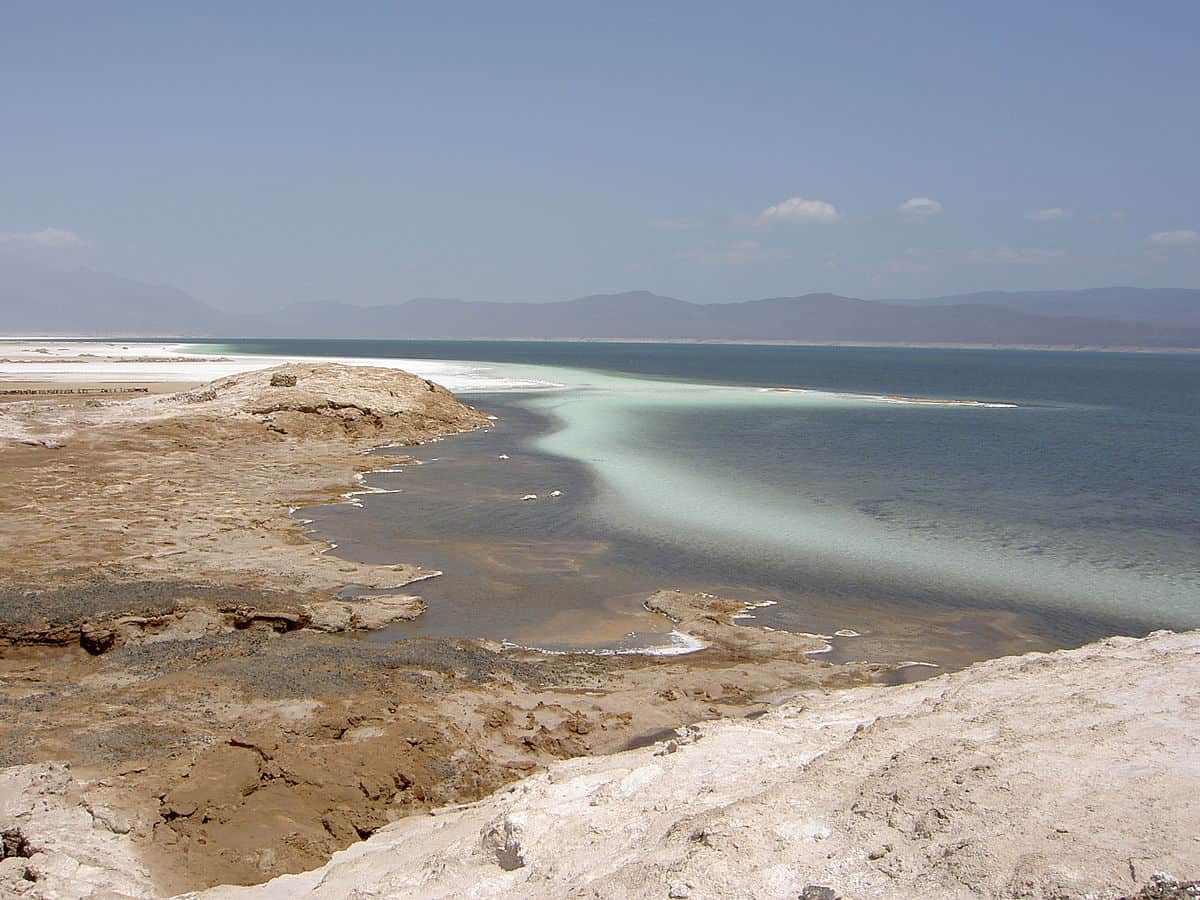
The saline crater lake of Assal marks the lowest point on the African continent and the second-lowest land depression in the world after the Dead Sea. Uniquely the lake is also the most saline lake outside of Antarctica, the first one being Don Juan Pond in Antarctica. Given this record, it’s no surprise that Assal also holds the world’s largest reserve of salt. Equally as interesting in Lake Abe near the Ethiopian border where one can experience the Afar culture, witness the smoking limestone chimney vents and spot flamingos.

Containing 70% of the country’s population, Djibouti is the city which gives its name to the country. Things to do here include a visit to the fishing ports around the Gulf of Tadjoura, the People’s Palace on Boulevard Bounhour, Siesta Beach and Al Sada Mosque.
Most international visitors can get a visa on arrival in Djibouti.
To complete this process, guests are required to have a letter of invitation, which is usually supplied by your tour operator (such as Untamed Borders) prior to your arrival.
A yellow fever vaccination certificate is also required if you are arriving from, or in some cases transiting through, a country where yellow fever is considered a transmission risk.
There is also a Djibouti e-visa, but it is unreliable. It is sometimes used by Untamed Borders guests, but please note that the website can suffer from tech issues. When applying for the e-visa, you will need to supply a hotel name and the letter of invitation.
If you have any questions about which countries are affected and about the visa process for your nationality, please email our team on - info@untamedborders.com.
Yes, in theory independent travel is possible in Djibouti, particularly in Djibouti City and to Tadjoura.
However, it’s important to note that parts of the country are extremely remote, with poor roads, a harsh climate and a lack of nearby facilities.
This includes areas which contain some of the country’s main tourist highlights, including around Lac Abbe and Lac Assal.
It’s recommended that visitors travel with an experienced tour operator if heading out of the capital, to ensure you have the appropriate 4x4 vehicles and the local knowledge needed to head out into a very difficult landscape.
Fuel resupply locations, food, drinking water sources and medical support can all be far away in the country’s interior.
Djibouti has a hot climate throughout the year, but there is a significant difference between the relatively comfortable winter months and the extreme heat of summer. For most travellers, November to February is the best time to visit.
November to February – Winter
This is generally the best time of year to visit Djibouti. Daytime temperatures are usually in the high 20s°C to low 30s°C, while evenings can feel pleasantly cooler, particularly away from the coast.
Conditions are much more comfortable for exploring Djibouti's desert landscapes and major natural sights such as Lake Assal and Lake Abbé, where there is very little shade.
Untamed Borders organises an annual group trip to the country at this time of year, to make the most of the favourable conditions - we also visit Somaliland as part of the Horn of Africa tour.
The winter months also coincide with the main whale shark season, generally running from around November into February, when whale sharks gather in the Gulf of Tadjoura and can sometimes be seen while snorkelling or diving.
March to April - Spring
Temperatures begin to rise during March and April, but travel is still very possible. Daytime temperatures increasingly move into the 30s°C, particularly inland, and the midday heat becomes more noticeable.
This can still be a good period to visit if you want to avoid the busiest winter months, but activities in exposed desert areas are best planned for the mornings and late afternoons.
May to September - Summer
This is the hottest and most challenging time to visit Djibouti. Temperatures regularly exceed 40°C, particularly between June and August, and conditions can feel even hotter around the low-lying desert areas.
A hot, dry wind known locally as the khamsin can add to the harsh conditions, while high humidity along the Red Sea coast can make Djibouti City particularly uncomfortable.
Travel is still possible, but long days outdoors and desert exploration can be physically demanding. Anyone travelling during this period needs to take the heat seriously and carry plenty of water.
We would advise guests to choose another time of year to enjoy Djibouti comfortably.
October – Autumn transitional Season
October marks the transition back towards Djibouti's more comfortable winter weather. Temperatures are still hot, often well into the 30s°C, but conditions gradually begin to improve as the month progresses.
The humidity drops sharply along the coast and around Djibouti City too, so late October can therefore be a good compromise for travellers wanting to visit just before the main winter season.
Untamed Borders organises group trips to Djibouti at the tail end of October every year too.
Most international visitors arrive into Djibouti–Ambouli International Airport (JIB), just outside Djibouti City.
There are useful connections through several major regional and international hubs.
Some of the most commonly used routes by Untamed Borders guests include connections with Ethiopian Airlines to Djibouti via Addis Ababa, Qatar Airways via Doha, and Turkish Airlines between Istanbul and Djibouti.
Overland Travel to Djibouti
The most straightforward overland crossing into Djibouti is from Ethiopia.
The Ethiopia - Djibouti frontier has several official crossing points, including Galafi, Dewele and Balho. Galafi is particularly important and forms part of the main Ethiopia - Djibouti transport corridor.
There is also an international railway service between Ethiopia and Djibouti, although schedules can be relatively infrequent and prone to changes.
Travelling between Djibouti and Somaliland is also possible via the Loyada/Lowyacadde border area. On Untamed Borders’ Horn of Africa group trips we make this crossing, before exploring into Somaliland.
We recommended only making the crossing between Djibouti and Somaliland with experienced support - the region contains harsh desert, with large gaps between settlements and resupply locations. The road conditions can also be unpredictable.
The border with Eritrea is one we don’t travel across with guests - it’s an area which has suffered from longstanding tensions and security challenges.
For more information about travelling in Djibouti and about border crossings, please contact the Untamed Borders team on - info@untamedborders.com
Djibouti has a better security landscape than some other countries in the region, but this is relative and there are still challenges.
Travelling with an experienced tour operator, such as Untamed Borders, is advised.
There are also regional differences in the security situation and there are higher risks in border areas close to Eritrea, than there is in say Djibouti city.
Many of the challenges the country poses aren’t just necessarily due to solely security, but also due to its extremely hot climate and the low level of infrastructure.
When travelling outside of the capital you are likely to encounter poor quality roads in places, isolated terrain, long distances between fuel stations and medical facilities, plus very hot conditions.
Travellers should also heed the advice of their local guide when travelling in the country when it comes to photography. There are a lot of sensitive locations, which can’t be photographed, including foreign military facilities, local military sites and critical infrastructure etc.
Djibouti is a predominantly Muslim country, and visitors should dress conservatively.
Women should wear lightweight, loose-fitting clothing that covers the shoulders and lower legs, such as trousers or a long skirt. Men should also wear trousers and a loose-fitting shirt.
A headscarf or traditional abaya isn’t necessary for women and particularly in Djibouti City attitudes towards dress are more relaxed.
Having a headscarf with you, just in case it is needed in rural communities, is a good idea, but may not necessarily be used.
Djibouti remains predominantly a cash based economy and the use of credit and debit cards isn’t common.
Untamed Borders advises its guests to bring in a supply of US Dollars into the country, to cover all your needs for the trip. These can then be exchanged in Djibouti City into the local currency - the Djiboutian franc (DJF).
Before you travel, our team can advise guests on how much US Dollars they may need for their duration of tour.
US dollars may be accepted in larger hotels, within the tourism sector and for other large purchases, but it is advised to have a supply of Djiboutian francs too, for daily spends, markets, stalls and other little purchases.
International cards can be useful at some larger hotels, restaurants, banks and businesses in Djibouti City, but travellers should not rely entirely on them, particularly when travelling into rural areas.
Outside the capital ATM facilities may not be available at all and card payments aren’t likely to be accepted.
Djibouti's two official languages are French and Arabic.
However, Somali and Afar are extremely important everyday languages too and reflect the country's two principal indigenous communities.
French remains particularly useful for administration, hotels, restaurants and dealing with officials.
English is spoken by some people working in tourism and international organisations, but it’s much less widespread, so even a little basic French can be useful when travelling in the country.
Internet access in Djibouti is better than might be expected for such a small and remote country, particularly in the capital.
The country has much better infrastructure than many other parts of East Africa and travellers can expect reliable internet connections in Djibouti City - with WIFI available at most hotels and within many modern businesses.
The country also has decent mobile data services in built up areas, but connectivity can become patchy and sometimes unavailable in more remote parts of the country. This is worth keeping note of if you’re travelling to Lac Abbe or Lac Assal.
If you’re leaving the capital on your trip it is advised to download important documents, maps and other key information before you head out of the city. You shouldn’t expect to always have internet access.
Djiboutian cuisine reflects the country's position between East Africa, Arabia and the Red Sea.
The food contains influences from Somali and Afar traditions, mixed in with Yemeni, French and other regional influences.
Common foods include:
Djibouti City's close proximity to the Arab world and large Yemeni/wider Arab influence is particularly noticeable in its restaurants, while the country's French colonial history means that baguettes, pastries and French-style cafés can also be found.
Seafood can be excellent in Djibouti too, especially along the coast, while meals are frequently accompanied by chilli sauces, flatbread and sweet tea is the drink of choice.
Islam is the dominant religion in Djibouti - it’s the country's state religion and the overwhelming majority of Djiboutians follow Sunni Islam.
There are also small Christian and other religious communities, but these are low in number compared to Islam.
Islam plays an important role in everyday life, particularly around dress, social customs, prayer and Ramadan - it’s important to be respectful around religious sites and during holy celebrations in the Islamic calendar.
Djibouti: A Political History — Samson A. Bezabeh
Probably the best starting point for understanding modern Djibouti. Bezabeh traces the country's political development since independence from France in 1977 and explains how its geography, ethnicity and strategic position have shaped the modern state.
Subjects of Empires/Citizens of States: Yemenis in Djibouti and Ethiopia — Samson A. Bezabeh
A fascinating look at the historic Yemeni community on the African side of the Red Sea. It explores migration, colonial rule, commerce and identity in Djibouti and neighbouring Ethiopia.
Djibouti and the Horn of Africa — Virginia Thompson and Richard Adlof
Published in 1968, before Djiboutian independence, this is inevitably dated but remains an interesting historical account of what was then the French Territory of the Afars and Issas and its relationship with the wider Horn of Africa.
Beau Travail — Claire Denis
The standout film connected with Djibouti. Set among French Foreign Legion soldiers stationed in the country, it makes striking use of Djibouti's desert landscapes, coastline and capital. More atmospheric than explanatory, it is now considered a modern classic of French cinema.
View on Africa: Djibouti, Playground of Superpowers — DW Documentary
A useful long-form documentary examining why such a small country hosts military bases belonging to several of the world's major powers, and what Djibouti's extraordinary strategic location means for local people.
Inside Story: What Will Djibouti's Elections Mean for Stability? — Al Jazeera
A useful introduction to Djibouti's modern politics, its long-running leadership and the reasons international powers take such a strong interest in the country.
Yemenis Find Refuge, Little Else, in Djibouti's Obock Camp — Al Jazeera
A short report that gives a very different perspective on Djibouti, looking at the historic connections across the Bab el-Mandeb Strait and the arrival of Yemeni refugees in the northern town of Obock.


