
Located in the Horn of Africa, Somaliland proclaimed itself independent from Somalia in the early 1990’s. Unlike the rest of Somalia, the self-declared country has largely avoided unrest. However the association to Somalia has often deterred visitors from visiting the peaceful country. The capital Hargeisa is bustling with street vendors wanting to exchange your money, spicy aromas from the food stalls and a daily camel market unlike any other livestock trading. It also hosts the Somaliland Marathon, the countries annual and only international mixed-gender event featuring a full marathon and 10km distance race. Las Geel is situated just outside of Hargeisa and is home to Neolithic cave paintings. The exact age of the rock art is uncertain estimates range between 3,000 and 10,000 BC. Meaning ‘camel’s well’ in Somali, the well-preserved imagery depicts cows giving a glimpse into the countries livestock history. Somaliland’s coastal highlight is found in the city of Berbera. Previously a bustling Ottoman town at the centre of trade between the Middle East and the Horn of Africa, it now stands as a shadow of its former glory. It’s only trace found in the cities architecture, featuring Ottoman- style brightly coloured buildings and mosque. Daallo Forest doesn’t disappoint nature enthusiasts with its diversity of flora, fauna, birds and mammals.
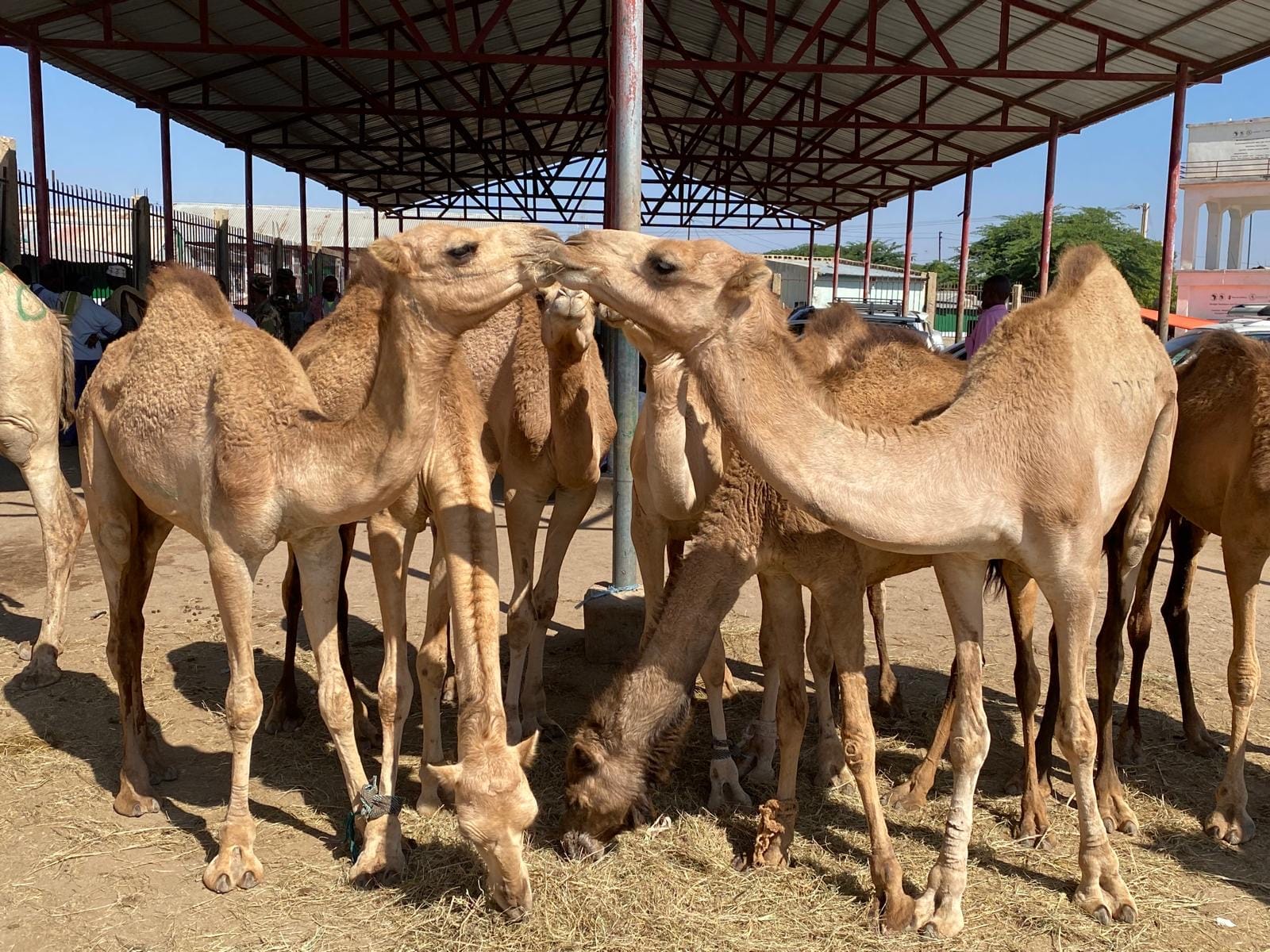
Capital of the self-proclaimed republic, it’s one of the safest places in the Somali region. It’s from this city one can venture out in to the outskirts of Somaliland, such as a trek to the twin summits of Hablood – or Virgin’s Breast Mountain – located in the scrubby desert area of Woqooyi Galbeed province. Alternatively a three hour drive will take you to the port city of Berbera on the Gulf of Aden where camels roam free on beaches and one can discover the old buildings and history left behind by the British when it formed the capital of their Somaliland protectorate.

In the deserts north of the Somaliland capital are the remarkable cave paintings of Las Geel. Las Geel means Camel watering hole in Somali and 6000 – 9000 years ago the people of the region covered a nearby rock outcrop with hundreds of stylised images of cows, dogs, people and giraffes. One of the horn of Africa’s most intriguing sights.
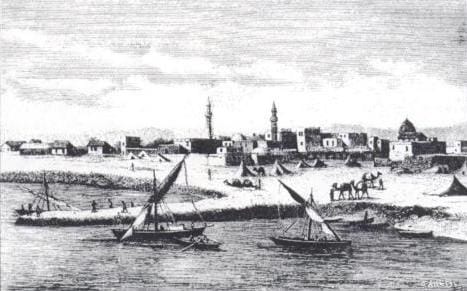
Once a prosperous 1st Century port used by the Avalites, Zeila is now a quiet coastal town not far from Djibouti. Being located on the Red Sea there’s a considerable amount of coral reef, mangroves and offshore islands to visit which form the Sa’ad ad-Din Archipelago named in honour of the Sultanate of Ifat which ruled over the region between the 13th-15th Century.
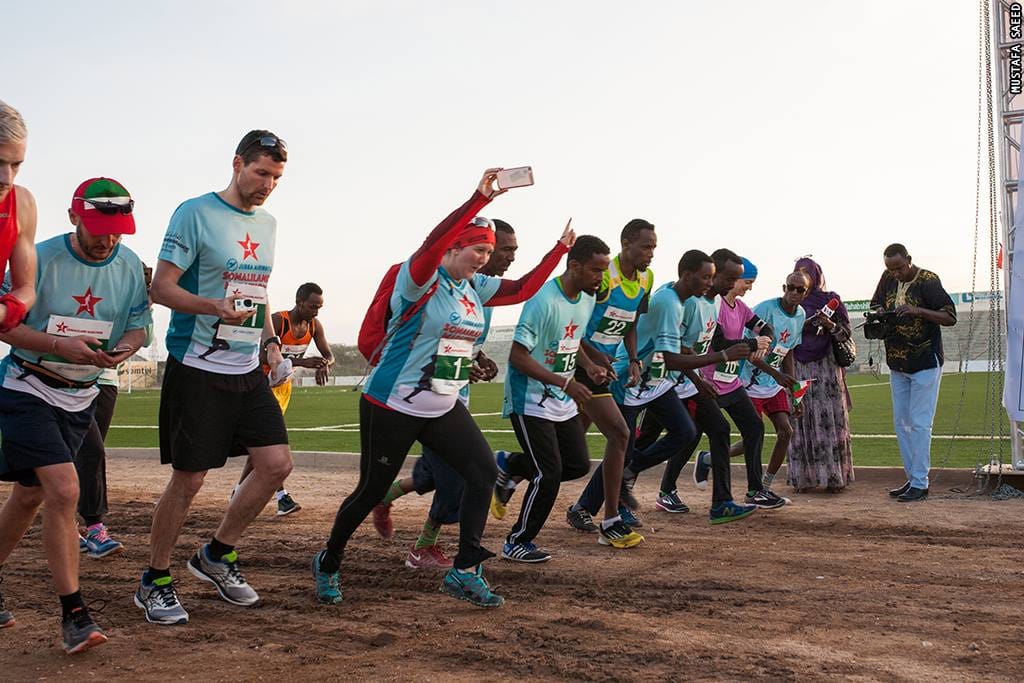
In 2018 Untamed Borders teamed up with the event organisers to offer travel packages to Somaliland’s inaugural marathon and up until the COVID pandemic. Running a marathon in this fascinating country, where the local hospitality is legendary is an unforgettable experience. Through the Darlington Foundation, and the funds raised by runners, some young Somaliland adults will get the opportunity to receive a university education, which otherwise may not be available to them.
The event hasn't resumed yet post-COVID.
Somaliland declared independence from Somalia in 1991 and operates with its own government, security forces, currency and immigration system. However, its independence is not widely recognised internationally, and Somalia continues to regard Somaliland as part of its territory.
Human settlement in the region has stretched back thousands of years. One of its most remarkable archaeological sites is Laas Geel, with ancient rock art paintings that date back around 5,000 years old.
Somaliland's location on the Gulf of Aden also placed it on ancient trading routes connecting the Horn of Africa with Arabia, Egypt and the wider Indian Ocean. Ports such as Zeila and Berbera became important commercial centres. Livestock, hides, gums, incense and other products from the Somali interior were exchanged for goods arriving from Arabia and beyond.
During the medieval period, parts of the region were connected to a succession of Muslim sultanates and trading states. Zeila became particularly important as a commercial and Islamic centre and was associated with the Adal Sultanate, which became one of the major powers of the Horn of Africa.
European involvement increased dramatically during the late 19th century as Britain, France and Italy competed for territory around the Horn of Africa. Britain's interest was partly strategic. The opening of the Suez Canal had made the Red Sea route increasingly important, while the British-controlled port of Aden sat directly across the Gulf. Britain wanted friendly and secure ports on the African side of the waterway too.
Between the 1880s and the end of the decade, Britain concluded a series of agreements with Somali clans and established what became the British Somaliland Protectorate. British Somaliland existed from the 1880s until 1960.
British administration nevertheless remained relatively light compared with colonial governments in some other parts of Africa. During the Second World War, Italian forces invaded British Somaliland in 1940, briefly occupying the territory. British and Commonwealth forces retook it in 1941.
British Somaliland became independent on 26 June 1960 and, five days later, united with Italian Somaliland to form the Somali Republic. Over time, dissatisfaction grew in the north, particularly under the authoritarian rule of Siad Barre.
During the 1980s, the Somali National Movement (SNM) fought Barre’s government. In 1988, Hargeisa and Burao suffered devastating attacks, and large numbers of civilians were killed or displaced.
After Barre was overthrown and Somalia’s government collapsed in 1991, northern leaders declared the restoration of Somaliland’s independence on 18 May 1991.
Since then, Somaliland has built its own government, security forces, currency and electoral system. However, Somalia continues to regard it as part of its territory, and parts of Somaliland’s claimed eastern regions remain disputed.In 2025, Israel became the first UN member state to formally recognise Somaliland, although most countries still recognise it as part of Somalia.
For travellers, this means Somalia, Somaliland and Puntland should not be treated as one uniform destination. Routes, visas, permissions, security arrangements and local authorities can vary significantly depending on where you are travelling.
This page specifically talks about Somaliland, make sure to read our Somalia and Puntland FAQs, for full information on travelling to those destinations. You can also read more about the history of the region in this article.
Somaliland has a visa on arrival system for people flying into Hargeisa’s Egal International Airport, it is also possible to complete this process at Berbera Airport (although it is less commonly used by visitors).
To complete the process you have to supply documentation to your tour operator, such as Untamed Borders, to ensure your necessary paperwork is prepared, in time for your arrival in Somaliland.
A letter of invitation (LOI) is required for people travelling to Somaliland, this is usually supplied by your tour operator.
If you are travelling overland and not flying, then the visa on arrival system is not available and you have to organise your visa prior to arrival. This is something Untamed Borders can assist overlanders with.
For more information about the visa system in Somaliland, please email - info@untamedborders.com.
Independent travel is, in theory, possible, particularly if you only stay in the city of Hargeisa.
However, once you leave the city, you need a police escort and this can make independent travel much more challenging.
Travelling to Somaliland, also requires a letter of invitation and this is usually provided by a tour operator or a hotel.
Due to the check-points outside Hargeisa and need for a police escort, it is advised to only travel with an experienced tour operator if you want to see other parts of the region - such as the ancient rock art sites at Las Geel, the coastline around Berbera or the mountainous interior around Sheik.
The best time to visit Somaliland very much depends on where you plan to explore in the country
Somaliland’s climate varies considerably with altitude. Hargeisa lies on an elevated plateau, so temperatures are generally more moderate, but in Berbera and along the Gulf of Aden coast, it is much hotter and more humid, even during winter.
In January, Berbera typically reaches around 29°C, while summer daytime temperatures commonly approach or exceed 38°C.
The main climatic seasons are:
December to early March – Jilaal:
Mostly dry and sunny. This is usually the best overall period for visiting, particularly along the coast..
Mid-March to June – Gu:
The principal rainy season. Rain is irregular but can produce heavy downpours and occasionally make rural roads more difficult. It also makes areas along the coast increasingly humid.
July to mid-September – Hagaa or Xagaa:
Generally dry, windy and extremely hot along the coast. Northwestern highland areas may receive some additional rain.
Mid-September to November – Deyr:
The shorter secondary rainy season, with intermittent showers and thunderstorms, but less intense compared to Spring/early summer.
The easiest way to reach Somaliland is by flying into Egal International Airport in Hargeisa, the territory’s principal international gateway.
There are a number of direct flight connections to Hargeisa from major international hubs, including direct flights from Dubai and Addis Ababa.
It is also possible to fly to Hargeisa from Mogadishu, if you have visited the Somali capital before then travelling on to Somaliland.
Overland
It is possible to cross overland from Djibouti into Somaliland via the Loyada/Lawyacado crossing.
This is something Untamed Borders does on our Horn of Africa group trips, where we visit both countries on a 9-day tour.
It is also possible to overland from Ethiopia into Somaliland via the Tog Wajaale border crossing.
However, it’s important to note that the visa on arrival system is not in place for overland arrivals - people travelling overland into the country must arrange a Somaliland visa in advance of travel.
It is not practically possible to travel overland from Somaliland into Puntland due the conflict and insecurity in the border region.
Somaliland is generally more stable than southern and central Somalia, particularly in and around Hargeisa, Berbera and Borama.
However, this is relative to the Horn of Africa and there are still security challenges in certain parts of the region.
Travel outside Hargeisa requires specialist support, with an experienced tour operator and requires a police or security services escort.
The Eastern Provinces, along the border with Puntland, suffers from greater insecurity and a more challenging security landscape, compared to other parts of Somaliland.
Somaliland is a conservative Muslim society, so visitors should dress modestly throughout their trip.
Women should wear a headscarf in public settings and cover their shoulders, chest, arms and legs - on our group trips to Somaliland, we ensure an abaya is provided - a traditional, long flowing garment, that covers all these areas.
Men should wear long trousers with a T-shirt, polo shirt or lightweight long-sleeved shirt. Shorts and sleeveless tops are not acceptable.
We recommend wearing breathable fabrics, due to the intense heat you are likely to encounter in the country.
The best way for most visitors to pay in Somaliland is to carry US dollars in cash. Although the Somaliland shilling is the local currency, US dollars are widely accepted, particularly for hotels, tours, transport and larger purchases.
Make sure to bring enough US dollars with you, into Somaliland, to cover your needs during the trip. The Untamed Borders team will be able to provide detailed information on how much money to bring, ahead of your trip..
If you need to exchange US dollars into Somaliland shillings, then our local team will be able to assist with this - usually conducted in larger towns, such as Hargeisa.
Credit and debit cards are not widely accepted and should not be relied upon. There are some ATMs in Hargeisa that dispense US dollars and may accept international cards, but availability and reliability can vary.
Mobile money is extremely common in Somaliland and many local people pay for everyday needs this way, however, these services are usually linked to a local SIM card and registration, which isn’t feasible for most visitors.
Somali is the main language spoken throughout Somaliland and is the country’s official language. Arabic is recognised as the second language and is widely encountered in religious education and Islamic contexts.
English is also spoken to a lesser degree, particularly among younger people, government officials, businesspeople and those working in tourism. This is particularly the case in Hargeisa, but travellers will find English is less commonly understood in rural communities.
Internet access in Somaliland is generally good in the main towns and cities.
Hargeisa, Berbera, Burao and Borama have decent mobile data coverage, offering 4G and sometimes 5G services in certain urban areas.
Mobile data is usually more dependable than hotel Wi-Fi, which can be patchy and unreliable. Many hotels and restaurants in Hargeisa and other larger towns offer Wi-Fi, although speeds and reliability can vary.
Mobile data coverage becomes less reliable when travelling through rural areas, mountainous regions and long stretches of road between settlements. Travellers heading into more remote corners of the country should download maps and important documents before leaving urban areas.
Food in Somaliland is generally hearty, filling and centred on meat, rice, pasta and flatbread. The cuisine reflects the region’s pastoral traditions as well as centuries of trade with Arabia, East Africa and the wider Indian Ocean world.
A typical breakfast may include laxoox, a soft, slightly sour fermented flatbread similar to a pancake. It is often eaten with honey, sugar or ghee, or accompanied by liver, eggs or suqaar - small pieces of fried meat and vegetables.
Lunch is normally the largest meal of the day and commonly includes dishes with seasoned rice, known as bariis, or pasta served with goat, mutton, camel or beef. Meat may be grilled, roasted or slowly cooked in a stew, often accompanied by salad, vegetables, chilli sauce and sometimes a banana.
Fresh fish and seafood are available along the coast, with Berbera being one of the best places to try locally caught fish. However, food choices can become more limited away from Hargeisa and the larger towns, where meals are often based around rice or pasta with meat.
Sweet, strongly spiced Somali tea is served throughout the day and is the drink of choice among Somalilanders.
Islam is practised by almost the entire population of Somaliland, with the overwhelming majority following Sunni Islam.
Islam is also the official state religion and plays a central role in the country’s laws, culture and everyday life.
Becoming Somaliland — Mark Bradbury
Probably the best single introduction to modern Somaliland. It explains how the territory emerged from the destruction of the Somali state, declared the restoration of its independence in 1991 and developed its own institutions through locally organised peace conferences, clan negotiations and elections. It is particularly useful for understanding why Somaliland followed a different political path from southern Somalia.
The Orchard of Lost Souls — Nadifa Mohamed
A powerful novel set in Hargeisa in 1987, shortly before the city was devastated by war. Told through the experiences of three women, it explores dictatorship, resistance and the growing violence that preceded Somaliland’s struggle against the Siad Barre government. It provides an intimate, human perspective on a period normally described through politics and military history.
Peace in Somaliland: An Indigenous Approach to State-Building — Michael Walls
A more detailed study of the Burao, Borama and Sanaag peace conferences that helped establish Somaliland’s post-war political system. It explains how elders, clan representatives and local communities negotiated disarmament, reconciliation and government structures largely without the kind of international intervention seen elsewhere in Somalia.
Somaliland
This documentary follows five students from the Abaarso School near Hargeisa as they attempt to secure places at universities in the United States. Rather than concentrating entirely on conflict, it provides a more optimistic picture of education, ambition and young people hoping to contribute to Somaliland’s future.
Somaliland: The Country That Does Not Exist
An accessible ARTE documentary examining everyday life, politics and economic development in Somaliland. It looks at how the territory established its own government and institutions despite spending decades outside the internationally recognised state system.
Golden Land: A Search for Riches in Somaliland
A thoughtful documentary following Finnish-Somali Mustafe Hassan as he moves with his family from Finland to Somaliland after discovering that ancestral land may contain copper and gold. The film explores diaspora identity, returning home, family expectations, entrepreneurship and the realities behind dreams of mineral wealth.
The Real Mo Farah
This award-winning BBC documentary tells the story of Olympic champion Mo Farah, who was born Hussein Abdi Kahin in Somaliland and trafficked to Britain as a child. Parts of the documentary follow his return to Somaliland and reunion with members of his family. It offers a deeply personal examination of migration, displacement, identity and the Somaliland diaspora.


