Can you still ride the Iron Ore Train in Mauritania?

For many people planning to travel to Mauritania, there is one experience that sits firmly at the top of the list: riding the legendary Mauritania Iron Ore Train across the Sahara Desert.

Stretching for more than 700 kilometres between a key mining region and the Atlantic, this remarkable railway is far more than simply one of the world’s longest trains. It is a vital part of Mauritania’s economy and an essential transport link for thousands of people living in one of the most remote corners of the Sahara.

For adventurous travellers, however, it has the iconic railway journeys in West Africa.

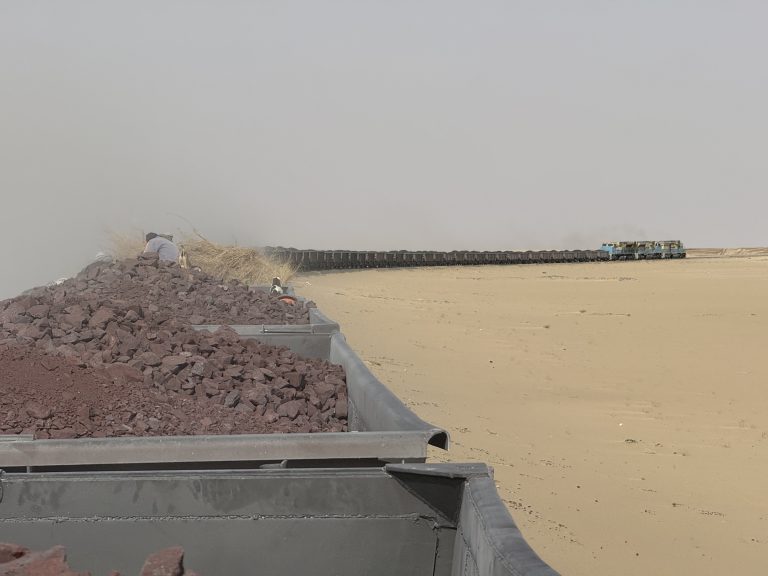
Unlike luxury train journeys such as the Orient Express or South Africa’s Blue Train, the Iron Ore Train in Mauritania is a working freight railway. There are no dining cars, observation lounges or private cabins. Instead, those travelling in the open ore wagons spend hours surrounded by iron ore dust, desert winds and seemingly endless Saharan landscapes.

It is challenging, uncomfortable and unforgettable.

Yet the future of riding the train is becoming increasingly uncertain. In recent years, Mauritania’s railway operator has taken steps to discourage tourists from travelling aboard the open wagons, citing safety concerns.

Untamed Borders has continued to include the experience on selected Mauritania group tours, wherever conditions and local regulations allow. However, if riding the Iron Ore Train is on your travel bucket list, now may be one of the last opportunities to experience it in its traditional form.

Where is the Mauritania Iron Ore Train?

The Iron Ore Train runs across northern Mauritania, linking the mining town of Zouérat with Nouadhibou, the country’s second-largest city and main Atlantic port.

The railway stretches for more than 700 kilometres through a remote part of the Sahara. Along the route, the train passes through or near places such as Fderik and Choum, crossing a landscape that feels far removed from the modern world.

This is not a conventional passenger railway, the train’s main purpose is to transport its freight, but passenger movement exists, both among Mauritanians and tourists. 

The Saharan landscape can be challenging to navigate through, with long drive times and poor road conditions – the Iron Ore Train in Mauritania, proves an important and reliable method of transport to get from A to B for people who live in the desert.

However, for tourists it provides one of the most unusual railway experiences on earth. Travelling on the Iron Ore Train in Mauritania is not about comfort. It is about scale, atmosphere and the sensation of moving slowly through one of the world’s great desert landscapes. 

The train can be several kilometres long, with hundreds of wagons stretching into the distance. When it moves across the Sahara, it looks less like a train and more like a dark line drawn across the earth.

The Iron Ore Train, Mauritania

The history of Mauritania’s Iron Ore Train

The history of the Mauritania Iron Ore Train is tied closely to the country’s mineral wealth and the development of its modern economy.

Construction of the railway began in the early 1960s, and the line opened in 1963. Its purpose was clear: to connect the iron ore deposits to the coastal port. 

Since then, the railway has become one of the most important pieces of infrastructure in the country. Iron ore is one of Mauritania’s key exports, and the train remains central to moving that resource from the interior to international markets.

But over time, the train became more than just an industrial tool.

For people living in remote parts of northern Mauritania, the railway also became a lifeline. In a region with few roads and long distances between settlements, the train offered a way to move people, goods and supplies across the desert. Locals have long used the train to travel between remote communities, often riding in or on the wagons.

Later, adventurous travellers began to hear about it too.

Photographers, overland travellers, documentary makers and those drawn to usual journeys began seeking out the Iron Ore Train as one of the most unusual travel experiences in Africa. The appeal was not comfort, but authenticity. This was a working train, crossing a real desert, serving a real purpose.

That is why the Mauritania Iron Ore Train has become one of the country’s most iconic experiences.

What is the Choum Tunnel?

Choum Tunnel, Mauritania

One of the most fascinating chapters in the story of the Mauritania Railway is the Choum Tunnel.

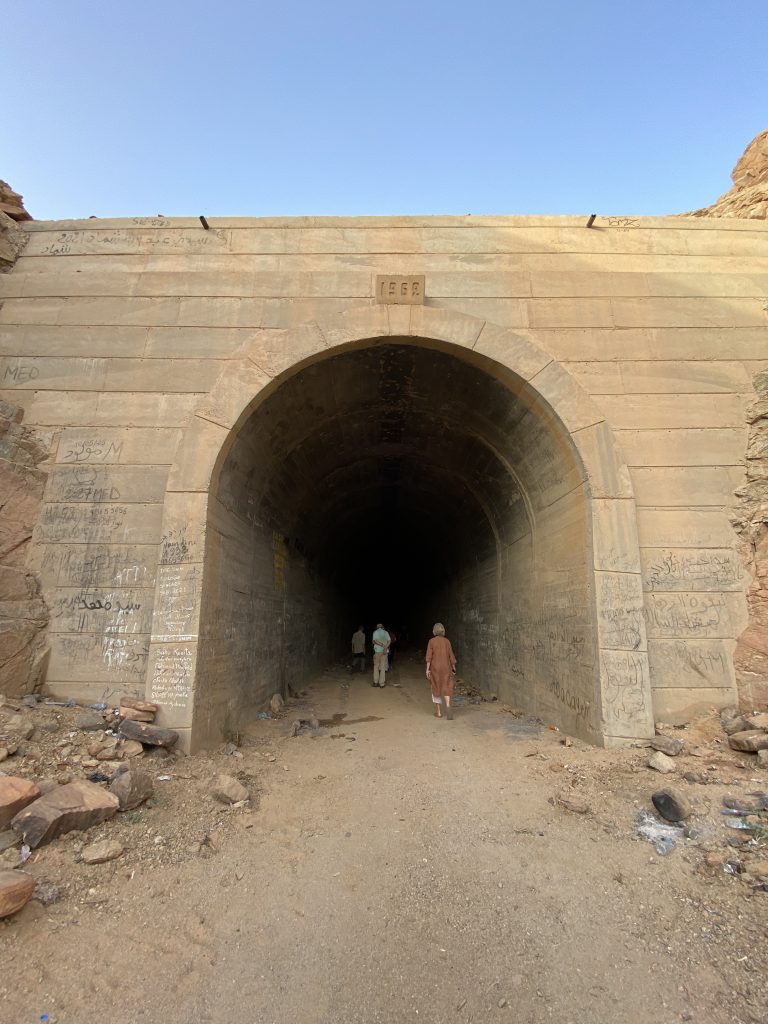
Choum is a small settlement in northern Mauritania and an important point on the railway route. Nearby lies a tunnel that was built for political and geographical reasons during the construction of the line.

In the early 1960s, when the railway was being planned, the area north of Mauritania was then Spanish-controlled Western Sahara. The most direct and practical route for part of the railway would have passed through that territory. However, building through Spanish-controlled land created political and administrative complications.

To avoid crossing the border, engineers designed the railway to remain inside Mauritanian territory. This required cutting a tunnel through a spur of hard rock near Choum.

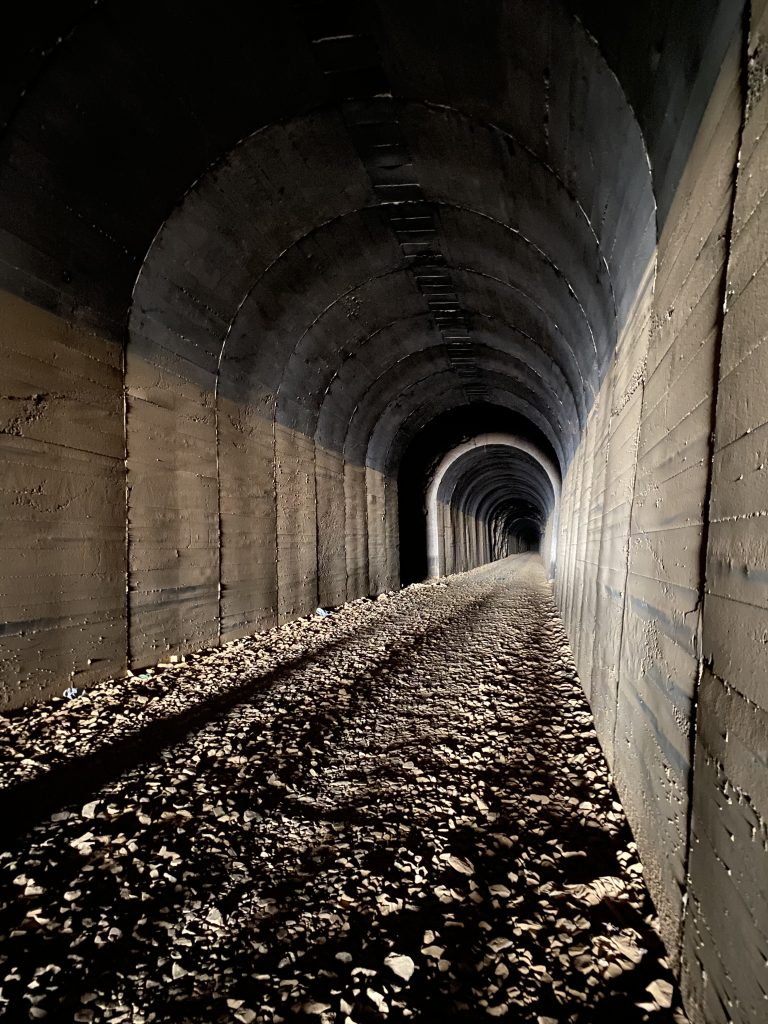
The result was the Choum Tunnel: a roughly two-kilometre passage through solid rock, built so the railway could avoid entering what was then Spanish Sahara.

In practical terms, it was an extraordinary solution to a political problem. Rather than taking the easier desert route through neighbouring territory, the railway was forced through a difficult section of terrain to stay within Mauritania.

Later, after the political situation changed, the railway was rerouted. The Choum Tunnel was eventually abandoned, and trains now bypass it on a diversion that briefly crosses through the Western Sahara side of the border area.

Today, the Choum Tunnel stands as a strange relic of colonial borders, engineering ambition and Saharan geopolitics. It is no longer a functioning part of the railway, but it remains one of the most interesting historic features connected to the Iron Ore Train.

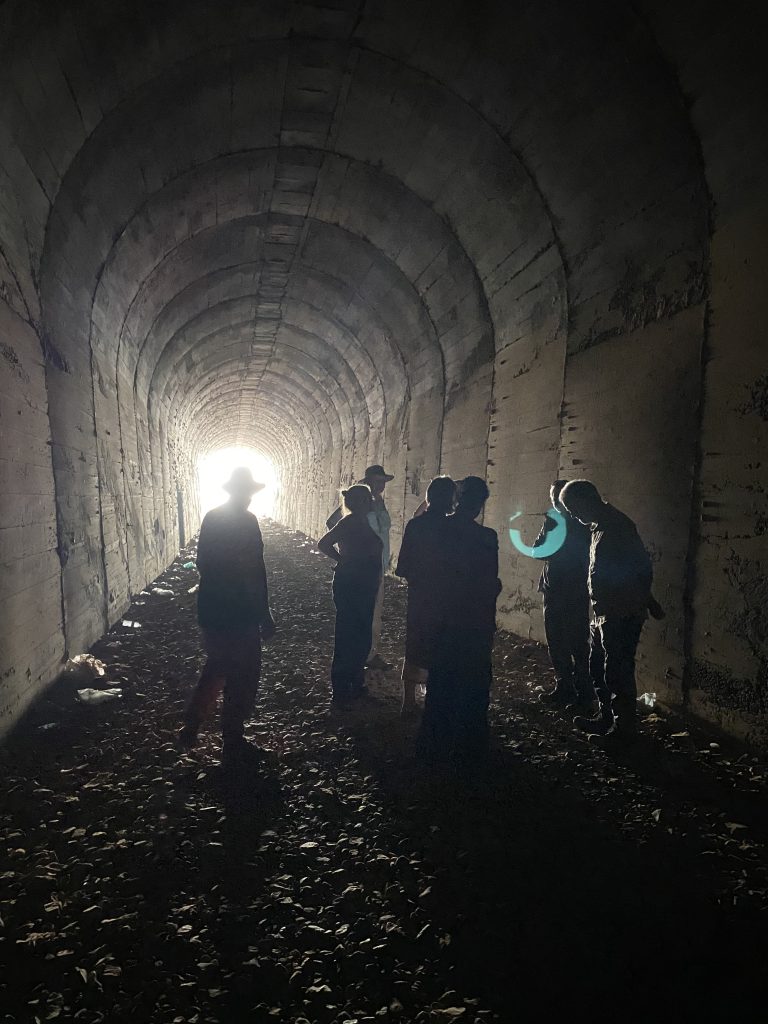
For travellers interested in Mauritania’s modern history, the tunnel adds another layer to the journey and it is still possible to walk into the tunnel.

The train is not only about desert adventure. It is also about industry, borders, colonial legacies and the way geography shapes the lives of people in remote places.
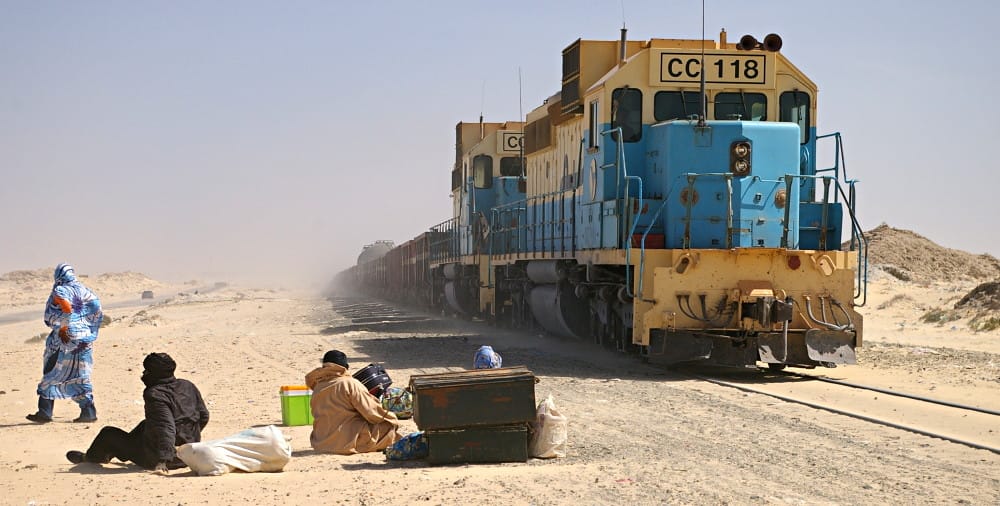
What is it like to ride the Iron Ore Train?

Riding the Iron Ore Train is not a normal train journey.

There are no comfortable seats in the ore wagons, no buffet carriage and no timetable that runs with the precision of a European railway. This is a heavy freight train operating in a remote desert environment.

Those who ride in the open wagons are exposed to the elements. During the day, the desert sun can be intense. At night, temperatures can drop sharply. Dust from the iron ore covers clothes, skin and bags. The sound of the train is constant, the movement is slow and heavy, and the landscape stretches endlessly in every direction.

But that is exactly what makes it unforgettable.

To ride the Iron Ore Train in Mauritania is to experience the Sahara in one of its most uncompromising forms. The journey is uncomfortable, but remarkable. The scale of the desert becomes impossible to ignore. The stars at night can be extraordinary. The sense of distance is immense.

It is also important to understand that this is a serious journey, not a casual novelty. Conditions can be harsh, especially for those riding in the ore wagons. Proper preparation, warm clothing, face protection, eye protection, water, food and local support are essential.

That is one reason why joining an organised Mauritania group trip can make the experience more manageable, with experienced tour guides providing the necessary safety equipment.

The Iron Ore Train, Mauritania

Visiting the Iron Ore Train with Untamed Borders

Untamed Borders organises group trips to Mauritania, giving travellers the chance to experience one of West Africa’s most fascinating and least-visited countries.

On this adventure, you can ride the Iron Ore Train, but there is much more to see, do and experience in Mauritania than just riding the rails.

The group tours to Mauritania also take you deep into the country’s desert, spending time in its mountains and amongst its otherworldly rock formations. You also visit the country’s desert towns, follow ancient caravan routes and camp amongst star-lit Saharan landscapes.

Travellers to Mauritania will visit the historic towns of Chinguetti and Oudane, famous for their links to the trans-Saharan trade, Islamic scholarship and desert culture. There will also be chance to visit Nouakchott, the capital, and spend time along the Atlantic coastline.

The Iron Ore Train may be the image that first draws many travellers to Mauritania, but the wider journey reveals a country of enormous depth.

That combination is what makes it such a rewarding destination for adventurous travellers.

Why travel to Mauritania now?

The country remains one of the least-visited in Africa, which is part of its appeal. The Iron Ore Train in Mauritania provides an added element of adventure to an already wonderful journey.

However, tourists may not be able to catch the Iron Ore Train forever, so to make the most of this awesome experience, travelling sooner rather than later might be key.

In recent years, and particularly since 2024, there have been moves to restrict the use of the open ore wagons by tourists and foreign visitors. 

The railway operator has made clear that travel on the ore wagons is not authorised, citing safety and health concerns. The classic image of riding exposed on top of the iron ore itself is becoming less certain.

For anyone dreaming of this journey, that creates a sense of urgency.

The Mauritania Iron Ore Train still runs. It remains one of the great industrial journeys of the Sahara. But the way visitors can experience it may change. What was once tolerated, informal and loosely managed is now coming under greater scrutiny.

Travelling with experienced tour operators, such as Untamed Borders, allows you to keep informed with the latest information and the local team will be able to assist with riding the Iron Ore Train, where possible.

In the Spring of 2026 Untamed Borders guests rode the Iron Ore Train on the Mauritanian group trip, but it’s not certain this will last forever.

To find our more information about group trips, catching the train in Mauritania and for Mauritania travel advice make sure to email our specialist team on – info@untamedborders.com